
Black streaks on a roof are not just an eyesore. On Long Island, they usually mean algae, moisture retention, and the start of a bigger maintenance problem. This guide to low pressure roof washing explains what the process actually does, why it matters, and how to tell whether your roof needs professional soft washing before those stains turn into premature wear.
What low pressure roof washing actually means
Low pressure roof washing is a cleaning method that uses specialized pumps and cleaning solutions instead of blasting the roof with high force. The goal is simple – kill and remove the organic growth causing the stains without damaging shingles, flashing, or other roofing materials.
That distinction matters more than most property owners realize. A roof is not a concrete driveway. Asphalt shingles, cedar shake, tile, and many other roofing surfaces can be shortened by aggressive pressure. Granule loss, broken edges, water intrusion, and loosened materials are real risks when the wrong method is used.
Soft washing takes the opposite approach. It treats the source of the staining first, then lets the cleaning process do the work. That is why low pressure cleaning is widely considered the safer and more effective option for roofs, especially when algae, mold, mildew, moss, and lichen are involved.
Why roofs on Long Island get stained so quickly
A roof takes constant exposure from humidity, rain, salt air, tree shade, and seasonal debris. In areas across Nassau County and Suffolk County, those conditions create the perfect environment for organic buildup. Black streaks are often caused by algae. Green patches may point to moss or mildew. White or crusty spots can be lichen starting to anchor into the surface.
The appearance is one issue. The bigger issue is what that growth does over time. Moss can trap moisture against the roof. Algae can spread quickly across large sections. Lichen can dig into the surface and become much harder to remove the longer it sits. Even if the roof is not leaking today, neglect can lead to more wear than necessary.
That is why roof cleaning should not be treated like a cosmetic extra. In many cases, it is part of protecting the roof you already paid for.
A guide to low pressure roof washing and how the process works
A proper low pressure roof washing service starts with evaluation, not spraying. The roof material, age, pitch, staining, surrounding landscaping, and level of growth all affect the right cleaning approach. A reliable contractor should know the difference between a roof that needs light treatment and one that has heavy moss or deeply rooted lichen.
Once the roof is assessed, the area is prepared. That usually includes protecting plants, checking runoff, and making sure the cleaning solution is applied carefully and evenly. The cleaning mix is designed to break down and kill algae, mold, mildew, and other contaminants at the root.
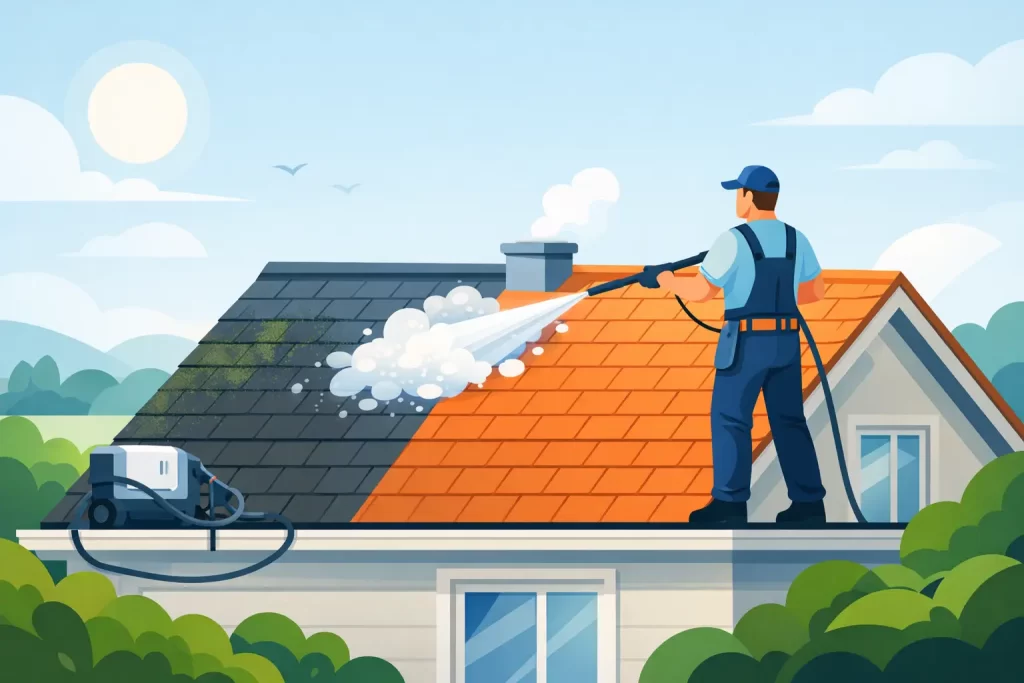
After application, the solution does the heavy lifting. In some cases, the roof shows immediate improvement. In others, especially where organic growth is more stubborn, the full visual result improves over time as weather helps rinse away the dead material. That is normal. Fast results are great, but the real objective is complete treatment, not just a temporary surface change.
The pressure itself stays low because force is not the point. The chemistry and application method are what make the cleaning effective. That is the main reason professional soft washing produces better long-term results than simply spraying a roof hard enough to make it look cleaner for the moment.
Why high-pressure roof cleaning is the wrong move
Property owners sometimes assume more pressure means a deeper clean. On a roof, that thinking can get expensive. High-pressure washing can strip the protective granules from asphalt shingles, force water under the roofing system, crack tiles, and shorten the life of the roof.
Even when visible damage does not happen right away, the wear can build. A roof that has been aggressively cleaned may look better for now but perform worse later. That is a poor trade if the goal is protecting property value.
There is also the issue of incomplete treatment. High pressure may remove some visible staining, but if the algae or mold is not properly treated, the problem often comes back faster. Low pressure roof washing is better because it is designed to kill the growth, not just knock off what you can see.
Which roofs benefit most from soft washing
Most residential and commercial roofs respond well to low pressure cleaning, but the exact method still depends on the material and condition. Asphalt shingle roofs are among the most common candidates because they are especially vulnerable to damage from high pressure. Tile roofs and older roofing systems also require a controlled approach.
If a roof has heavy moss, thick lichen, or visible deterioration, the plan may need to be adjusted. Some growth can be treated and removed safely. Some areas may need more caution. If a roof is already near the end of its life, cleaning may improve appearance but will not reverse age or structural issues. That is where honest evaluation matters.
A dependable contractor should be clear about the difference between a roof that can be restored with cleaning and a roof that has deeper problems. Good service is not just about saying yes. It is about using the right method for the roof in front of you.
What results should you expect
A professionally soft washed roof should look noticeably cleaner, with black streaks, green buildup, and discoloration reduced or removed depending on the severity. More importantly, the underlying organic growth should be treated so the roof stays cleaner longer.
Results are not identical on every property. Shade, tree coverage, roof pitch, moisture levels, and the age of the stain all play a role. A heavily shaded roof may need more frequent maintenance than one that gets full sun. A roof with years of buildup may not respond the same way as one cleaned at the first sign of staining.
That does not mean the process is less effective. It means roof cleaning is not one-size-fits-all. The right expectation is a safer, longer-lasting clean that addresses the cause of the problem without the damage risks that come with high pressure.
How often should a roof be cleaned?
For many properties, roof cleaning is not an annual requirement, but it should not be ignored until the stains become severe. If you start seeing black streaks, patches of moss, or signs of mildew, that is usually the right time to have the roof inspected.
Some homes need cleaning more often than others. Properties near trees, water, or damp shaded areas usually develop buildup faster. Commercial buildings with large roof areas can also show uneven staining that worsens if left untreated.
The smartest approach is preventive. Cleaning a roof before growth gets out of control is usually easier, safer, and more affordable than waiting until the problem is spread across the entire surface.
Choosing the right company for low pressure roof washing
Roof cleaning is not the place to hire someone who treats every surface the same. You want a company that specializes in soft washing, understands roof materials, and can explain exactly how the process protects the surface while delivering visible results.
Look for a contractor that offers clear estimates, stands behind the work, and does not push high-pressure methods on delicate roofing systems. Guarantees matter too, because they show confidence in the process. For homeowners and property managers who want peace of mind, that makes a real difference.
Supreme Clean Power Washing has built its reputation around that kind of service – safe low-pressure cleaning, strong results, competitive pricing, and roof cleaning backed by a 100% satisfaction guarantee and a 1-year spot-free limited warranty. For property owners who want the roof cleaned without taking chances on damage, that is the standard to look for.
The real value of low pressure roof washing
A clean roof improves curb appeal right away, but the bigger value is protection. When algae, moss, mold, and lichen are allowed to sit, they do more than stain the surface. They hold moisture, speed up wear, and make a roof look older than it is.
Low pressure roof washing gives property owners a smarter option. It is safer than high-pressure cleaning, more effective against organic growth, and better aligned with long-term roof care. If your roof is showing streaks, discoloration, or patches of growth, taking action now is usually the better move than waiting for the damage to become more expensive.