

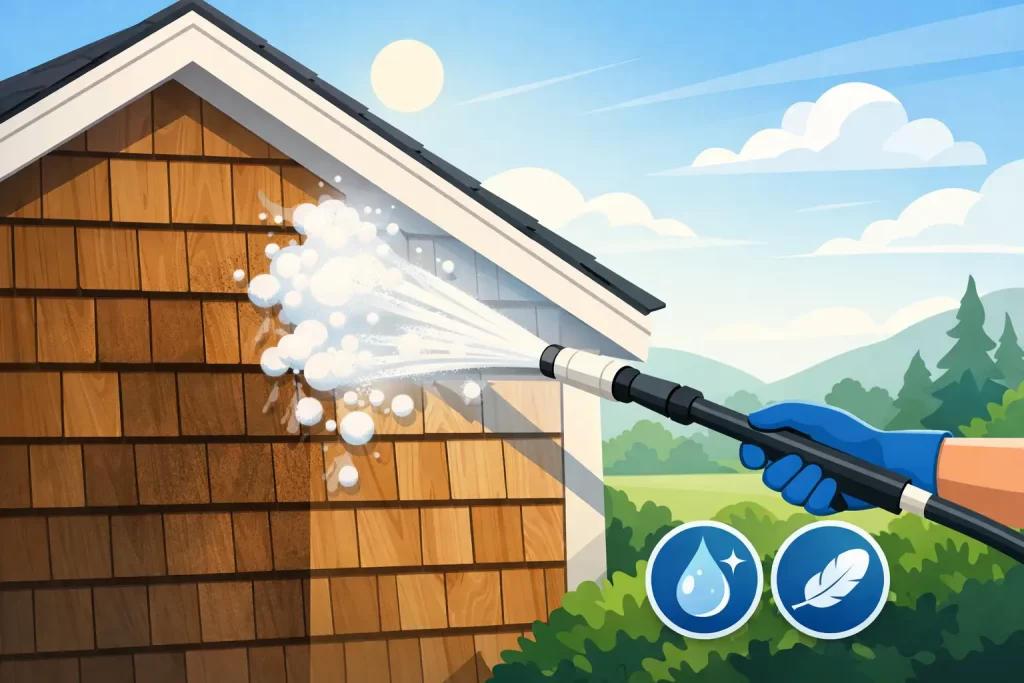
A cedar-sided home can look weathered long before the wood has reached the end of its life. On Long Island, shade, humidity, salt air, pollen, and seasonal moisture create ideal conditions for dark algae, mildew, mold, and green organic growth. Soft wash cedar shake siding is the safest way to remove those stains without blasting delicate wood fibers apart.
Cedar shakes are not standard vinyl siding. Their natural texture and split-grain surface give a home warmth and character, but that same texture holds moisture and debris. Cleaning them with the wrong pressure can leave permanent marks, strip protective stain, force water behind the siding, and shorten the life of the wood. A professional low-pressure approach is designed to clean the cause of the staining while protecting the cedar underneath.
Why Cedar Shake Needs a Different Cleaning Method
Cedar is a softwood. Even when it has been properly stained or sealed, it is more vulnerable than brick, concrete, vinyl, or composite materials. High-pressure washing can shred wood fibers, create fuzzy-looking patches, and make individual shakes appear uneven. It can also remove loose stain in a way that leaves the exterior blotchy rather than clean.
The risk is higher on older homes, where cedar may already be dry, oxidized, cracked, or affected by years of sun exposure. Pressure that seems manageable on a newer section can cause visible damage on a weathered wall. This is why cedar should never be treated like a driveway or hardscape surface.
A better result comes from using the right cleaning solution, allowing it time to work, and rinsing with controlled, low pressure. That process removes organic contamination instead of simply scouring the visible surface.
How Soft Wash Cedar Shake Siding Works
Soft washing uses a specialized cleaning solution applied at low pressure. The solution targets the organisms responsible for black streaks, green growth, mildew staining, and dingy discoloration. Once the treatment has done its job, the siding is gently rinsed so the grime and dead organic material can wash away.
The key difference is that the cleaning power comes from the solution, not from aggressive water pressure. That matters on cedar because it preserves the wood’s natural grain and helps avoid the gouges and raised fibers associated with improper pressure washing.
A professional service starts by assessing the condition of the siding. The technician should look for peeling stain, loose shakes, open seams, damaged trim, nearby landscaping, and areas where water could enter the home. The cleaning mixture and application method should be adjusted to the condition of the cedar, not applied as a one-size-fits-all treatment.
The stains soft washing is built to remove
The dark staining on cedar is often more than ordinary dirt. Algae, mold, mildew, and lichen can attach to the surface and thrive where the siding stays damp. Tree cover, sprinkler overspray, clogged gutters, and shaded north-facing walls commonly make the problem worse.
A surface rinse may brighten the siding for a short time, but it does not always remove the underlying organic growth. When those organisms remain, stains can return quickly. Soft washing addresses the root cause, which is why the finish tends to stay cleaner longer than it would after a water-only rinse.
What Homeowners Should Expect From a Professional Cleaning
The right cedar cleaning service is careful before, during, and after the wash. Plants and surrounding surfaces should be protected and rinsed as needed. Windows, doors, electrical fixtures, and sensitive exterior details require attention. Technicians should also avoid directing water upward beneath the shakes, where moisture can become trapped.
Results depend on the current condition of the wood and its finish. Healthy cedar with surface algae and grime can often show a major improvement after one treatment. Cedar with failed stain, heavy oxidation, deep weathering, or permanent tannin discoloration may need additional restoration work after cleaning. Soft washing cleans the siding, but it does not replace missing wood, repair rot, or restore a stain that has already deteriorated.
That distinction matters. An honest exterior cleaning professional will tell you whether cleaning is likely to deliver the result you want or whether the siding needs repair, sanding, staining, or sealing afterward.
When Cedar Siding Should Be Cleaned
Most cedar shake homes benefit from an inspection each year, especially after a wet spring or a season with heavy leaf debris. You may not need annual cleaning in every location, but waiting until the siding is heavily stained can make the job more difficult and allow moisture-related problems to spread.
Schedule a cleaning when you notice green or black patches, chalky-looking sections, mildew near shaded walls, or a general loss of the cedar’s natural color. It is also smart to clean the siding before applying a new stain or sealer. Applying a finish over dirt, algae, or mildew can trap contaminants against the wood and reduce how well the coating performs.
For homes in Nassau County and Suffolk County, the most troublesome areas are often the sides of the property that get limited sun, sections below rooflines with poor drainage, and walls near dense landscaping. Clearing leaves, trimming back shrubs, and keeping gutters flowing can help the exterior stay cleaner between professional visits.
Soft Washing vs. Pressure Washing Cedar Shakes
Pressure washing is not automatically wrong for every exterior surface. Concrete, pavers, patios, and certain durable materials may require higher pressure for effective cleaning. Cedar shake siding is different because the material is naturally softer and more absorbent.
Soft washing offers several practical advantages for cedar. It cleans without relying on force, reaches into the uneven texture of the shakes, and treats biological staining that plain water often leaves behind. It also reduces the chance of obvious pressure lines, splintering, or water intrusion.
There are situations where very controlled, low-pressure rinsing may be used as part of the process. The issue is not the presence of water pressure at all. The issue is excessive pressure applied too close to cedar or aimed in the wrong direction. A trained professional knows the difference and adjusts the method to the surface.
Avoid These Cedar Cleaning Mistakes
The fastest way to create an expensive siding problem is to rent a powerful pressure washer and use it at close range. Cedar may look cleaner at first, but damaged fibers can dry out, discolor, and become more vulnerable to moisture.
Harsh household cleaners can be another problem. Some products can discolor stain, harm surrounding plants, or leave residue on the wood. Scrubbing with overly stiff brushes can also wear down the surface. If a stain does not lift immediately, increasing pressure or scrubbing harder is rarely the right answer.
Do not ignore small signs of siding failure, either. Loose shakes, soft wood, missing caulk, or persistent dampness around windows should be addressed before any cleaning service begins. Cleaning can improve appearance, but it should not be used to hide active exterior damage.
Protect the Look and Life of Your Cedar
Cedar shake siding is an investment in your property’s appearance, and it deserves more care than a quick high-pressure rinse. A properly performed soft wash can remove the staining that makes a home look neglected while helping preserve the texture, grain, and character that made cedar the right choice in the first place.
Supreme Clean Power Washing uses low-pressure exterior cleaning methods built around surface protection and visible results. If your cedar has started to darken, turn green, or lose its curb appeal, a professional evaluation can help you choose a cleaning plan that protects the wood instead of taking chances with it.