

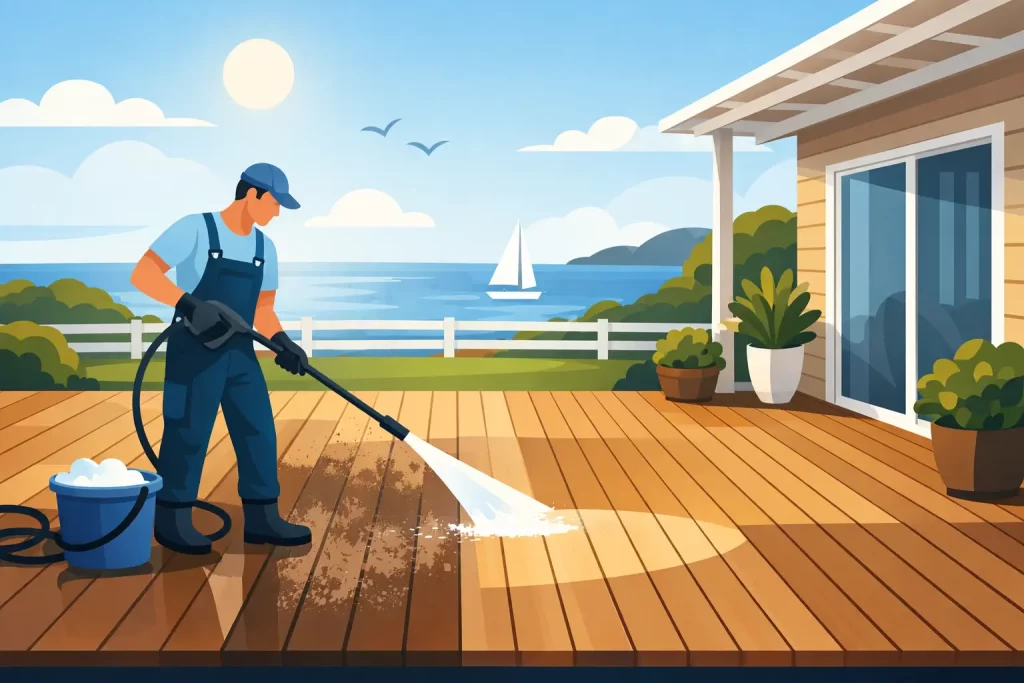
A deck can go from a favorite place to gather to a slippery, stained surface in one Long Island season. Humidity, tree cover, spring pollen, coastal air, rain, and shaded areas give algae, mold, and mildew the conditions they need to spread fast. Professional deck cleaning Long Island homeowners rely on does more than make boards look brighter. It removes the organic buildup that affects safety, appearance, and the long-term condition of the surface.
For wood, composite, vinyl, and other outdoor deck materials, the cleaning method matters as much as the cleaner. The wrong pressure or harsh chemical can leave behind splintered wood, etched composite, raised grain, faded color, or damaged fasteners. The right approach restores the deck without creating a bigger repair project.
Why Long Island Decks Get Dirty So Quickly
Long Island decks are exposed to more than ordinary dust. A deck under mature trees in Dix Hills or Manhasset may collect leaves, sap, pollen, and moisture for weeks at a time. A backyard near the water may face salt air and windblown debris. Even an open deck in Babylon, West Islip, or Melville can develop dark spotting after a wet stretch of weather.
The green or black film that appears on boards is often algae, mildew, mold, or a combination of organic growth and embedded grime. It does not always stay on the surface. On unfinished or aging wood, moisture and contaminants can settle into the grain. That is why rinsing with a garden hose may improve the appearance for a few days without solving the source of the staining.
A slippery deck is also a real concern. Algae can create a slick surface, especially on stairs, shaded walkways, and areas near pools, grills, planters, or outdoor kitchens. Cleaning is not only about curb appeal. It helps make the space safer for family, guests, tenants, and customers.
Deck Cleaning Long Island Properties Need Is Not One-Size-Fits-All
A professional deck cleaning plan starts with identifying the material, its current condition, and the type of buildup present. Pressure washing every deck at maximum force is not professional cleaning. It is a shortcut that can damage expensive surfaces.
Wood decks require controlled pressure
Natural wood can look excellent after a proper cleaning, but it is also vulnerable. Excessive pressure can cut into the grain, create uneven stripes, raise fibers, and leave boards rough to the touch. Softer woods are especially susceptible, while older decks may already have cracks, loose boards, worn stain, or exposed fasteners.
For wood surfaces, the goal is to use the lowest effective pressure along with the appropriate cleaning solution. The solution helps break down algae, mildew, and deep grime so the rinse can be controlled rather than aggressive. If the deck is due for staining or sealing, a careful cleaning also creates a better starting point for that next step.
Composite decks need the right chemistry
Composite boards are often marketed as low maintenance, not no maintenance. They can still develop mold, algae, black streaks, food stains, pollen residue, and discoloration around railings or in shaded sections. Their protective finish can be damaged by overly strong pressure, abrasive tools, or cleaners that are not suited to the manufacturer’s recommendations.
A professional evaluates whether the issue is surface dirt, organic growth, tannin staining from leaves, rust marks, or another problem. That distinction matters. A method that works on algae may not be the right solution for a grease stain or a rust stain, and forcing the issue with high pressure can permanently alter the board’s appearance.
Railings, steps, and edges need attention too
Decks rarely get dirty evenly. Railings hold pollen and cobwebs, stair treads become slippery, and the perimeter of the deck often traps leaves and moisture. A complete service addresses the details that make a deck look neglected even when the center boards appear clean.
It also includes protecting the surrounding property. Landscaping, nearby siding, patio furniture, doors, windows, and outdoor fixtures should be considered before cleaning begins. A skilled crew does not treat the deck as an isolated square of boards.
Soft Washing Versus Pressure Washing for Decks
Soft washing and pressure washing are both useful exterior cleaning methods, but they serve different purposes. The best choice depends on the deck material, the condition of the surface, and the severity of the growth.
Soft washing uses low pressure and carefully selected cleaning solutions to treat algae, mold, mildew, and organic staining at the source. It is often the safer choice for delicate materials, painted surfaces, composite decking, railings, and areas where high pressure could cause damage. The solution does the heavy lifting, followed by a controlled rinse.
Pressure washing may be appropriate for certain durable surfaces and stubborn buildup, but only when used with proper equipment, technique, and pressure settings. There is no benefit to blasting a wood deck simply because a machine is available. The best result comes from matching the method to the surface, not from using the most force.
Supreme Clean Power Washing approaches exterior cleaning with that protection-first mindset. The objective is clear: remove the grime and biological growth while respecting the material underneath.
Signs Your Deck Is Ready for Professional Cleaning
Most decks benefit from cleaning at least once a year, although heavily shaded decks or properties near dense trees may need attention more often. Waiting until the boards are black, green, or slippery usually means the buildup has had more time to settle in.
Schedule service when you notice a change in color, green film along board edges, black spots near railings, slick stairs, leaf stains that will not rinse away, or a dull, weathered look across the deck. If you plan to host a graduation party, barbecue, holiday gathering, or open house, cleaning beforehand can make the entire backyard feel more cared for.
There is also a practical reason to clean before sealing or staining. Applying a finish over dirt, algae, or damp wood can interfere with adhesion and shorten the life of the coating. The deck should be properly cleaned and allowed to dry according to the product requirements before any protective finish is applied.
What to Do Before and After a Deck Cleaning Service
Preparation is simple, but it helps the crew work efficiently and protects your belongings. Move furniture, rugs, planters, grills, and small decor items away from the deck when possible. Let the cleaning team know about loose boards, damaged railings, electrical outlets, water-sensitive features, or areas that have been recently painted or repaired.
After cleaning, give the deck adequate time to dry before placing furniture back or walking on it if the crew advises it. This is especially relevant for wood decks, where moisture can remain in the grain longer than it appears to on the surface. Avoid dragging heavy furniture across freshly cleaned boards, and keep leaves and standing water from collecting in corners.
Homeowners can extend the clean appearance by sweeping regularly, trimming back vegetation that blocks airflow, and removing leaf piles before they become wet and stained. These small habits do not replace professional service, but they slow down the conditions that invite algae and mildew back.
Choose Results That Protect the Deck You Paid For
A clean deck should look refreshed without looking scarred, fuzzy, or stripped. That is the difference between surface-level washing and a service designed around material safety and long-term care. Whether your deck is natural wood, composite, or a mixed outdoor living area with railings and stairs, the cleaning process should fit the surface.
Before the next stretch of humid weather turns a few dark spots into a larger problem, have the deck assessed by a local exterior cleaning professional. A clear estimate, the right low-pressure method, and attention to the details can help you enjoy the outdoor space with confidence again.