

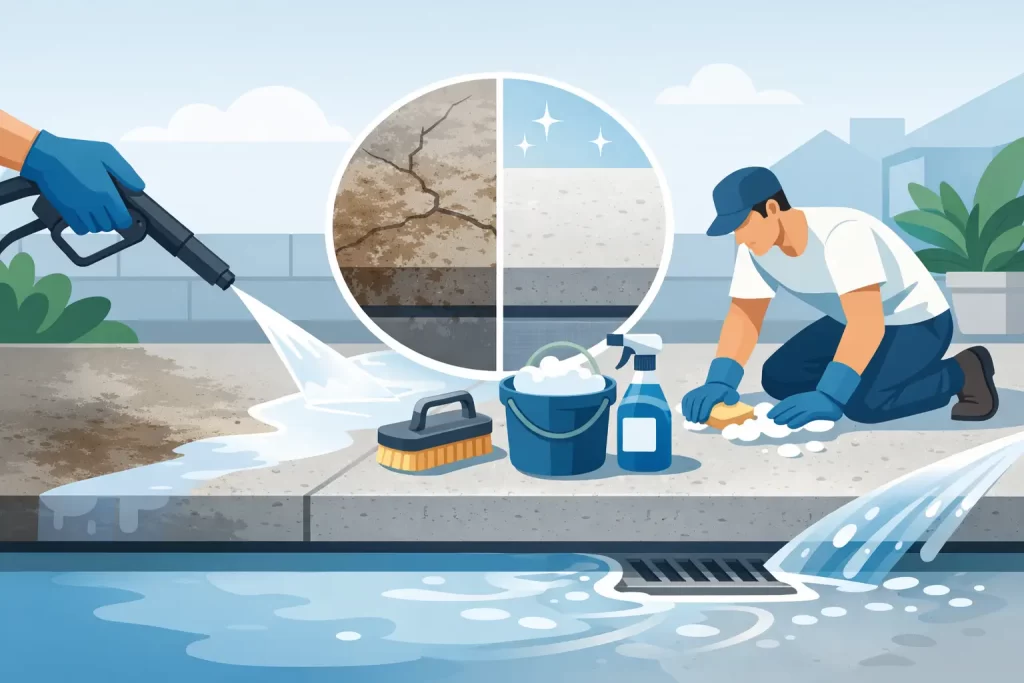
A concrete driveway can look worn out long before the surface is actually failing. On Long Island, shaded areas, humid summers, winter runoff, vehicle leaks, and tree debris leave patios, walkways, and driveways stained with algae, mildew, oil, and ground-in grime. The best ways to clean concrete depend on what is causing the discoloration and how old the stain is. Using the wrong method can leave streaks, damage nearby landscaping, or force dirty water into places it should not go.
Clean concrete is more than a curb appeal upgrade. Removing organic growth helps reduce slippery conditions, and regular care prevents stains from becoming harder to remove. The goal is not simply to blast away dirt. It is to treat the stain at its source, use the right amount of pressure, and leave the surface looking even when the job is done.
Start by Identifying What Is Staining the Concrete
Concrete is porous, which means it absorbs moisture, oils, and contaminants. A dark patch may not be the same problem as a green patch, even if both make the surface look neglected.
Green or black growth is usually algae, mildew, or mold. It is common on north-facing walkways, pool decks, patios, and areas beneath trees where moisture lingers. These stains need a cleaning solution that kills the organic growth before rinsing. Pressure alone may brighten the concrete for a short time, but it often leaves roots or spores behind, allowing the discoloration to return sooner.
Brown, black, or rainbow-colored spots near parked vehicles are commonly oil, transmission fluid, or other automotive leaks. Rust-colored marks may come from patio furniture, fertilizer, metal fixtures, or sprinkler water with high iron content. White powdery residue is often efflorescence, a mineral deposit that can appear when moisture moves through concrete and evaporates on the surface.
Knowing the stain matters because one cleaner will not solve every problem. A professional approach starts with the cause, not a one-size-fits-all rinse.
The Best Ways to Clean Concrete Safely
For light dirt and seasonal grime, a thorough pre-rinse followed by an appropriate exterior cleaner and controlled pressure washing can make a dramatic difference. The cleaner loosens soil and organic buildup so the equipment does not need to rely on excessive force. This is especially important on older concrete, decorative concrete, and surfaces with existing hairline cracks.
For algae, mold, and mildew, treatment comes first. The solution needs enough contact time to break down the growth, then the surface can be rinsed clean at a safe pressure. This method delivers a more uniform result than trying to erase stains with a narrow high-pressure nozzle. It also helps keep the growth from returning as quickly.
For oil stains, absorbent material and a degreasing treatment may be needed before washing. Fresh oil is far easier to lift than a stain that has sat through several seasons. Deep stains can require more than one application because the oil may have soaked below the visible surface. Aggressive pressure can spread the stain or roughen the concrete without fully removing it.
Rust and mineral deposits require a specialty treatment. Avoid guessing with harsh acids or household chemicals. The wrong product can etch the concrete, change its color, or damage adjacent stone, plants, siding, and metal. A trained technician can test an inconspicuous area and choose a cleaner that addresses the stain without creating a larger repair problem.
Use Pressure as a Finishing Tool, Not the Whole Strategy
Pressure washing is highly effective for concrete when it is done correctly. It removes loosened dirt, rinses away treated organic growth, and restores the cleaner, brighter appearance homeowners want. But more pressure is not always better.
Too much pressure, especially from a close-range wand, can leave visible lines known as wand marks or tiger stripes. It can also expose aggregate, chip weakened areas, and create uneven color across the driveway. These marks are frustrating because the surface may technically be clean while still looking worse than before.
Professional concrete cleaning typically uses commercial equipment, properly selected tips, cleaning solutions, and surface-cleaning tools designed to produce an even result. The equipment matters, but the operator matters more. A good technician adjusts the method for the age, condition, stain type, and layout of the concrete.
Why DIY Cleaning Can Go Wrong
A rented pressure washer may seem like the fastest answer to a dirty driveway. For a small, lightly soiled concrete pad, it can be manageable if you understand the basics. However, large driveways, heavily stained patios, and algae-covered walkways require more care than most people expect.
The most common DIY issue is uneven cleaning. Homeowners often overlap passes inconsistently or hold the wand too close, leaving stripes that become obvious once the concrete dries. Another frequent problem is using bleach, degreaser, or acid without accounting for plants, nearby surfaces, runoff, or the correct dilution. Cleaning chemicals are only helpful when applied and rinsed responsibly.
There is also the safety factor. Wet algae makes concrete slick, pressure washing creates overspray, and high-pressure water can cause injury or damage windows, doors, siding, screens, and landscaping. If the surface has oil stains, poor drainage, heavy biological growth, or delicate surrounding materials, professional service is usually the safer value.
A Better Cleaning Plan for Driveways, Patios, and Walkways
Concrete stays cleaner longer when it is maintained before stains become deeply embedded. A driveway that receives seasonal cleaning is generally easier and less expensive to restore than one neglected for years. Areas beneath trees or on the shaded side of a home may need attention more often because they hold moisture and organic debris.
Keep leaves, soil, and mulch off the concrete whenever possible. Clear debris from expansion joints and edges, where algae and moss often start. Address vehicle leaks quickly, and rinse fertilizer off walkways and patios after lawn care to reduce the risk of discoloration. If sprinkler heads repeatedly soak a walkway or patio, adjusting the pattern can limit recurring algae growth.
After the concrete has been professionally cleaned and fully dried, a suitable sealer can be worth considering. Sealers can make future maintenance easier by reducing the amount of water, oil, and grime that penetrates the surface. They are not a cure for poor drainage or constant vehicle leaks, and not every concrete surface needs the same product. The right decision depends on whether the concrete is plain, stamped, exposed aggregate, previously sealed, or showing signs of wear.
When Professional Concrete Cleaning Is the Right Call
Call a professional when concrete has widespread black or green staining, deep oil spots, rust marks, major discoloration, or a large area that needs an even finish. It is also the right choice when you want to avoid the risk of surface damage and protect the landscaping, siding, and fixtures around the work area.
For homeowners and property managers in Nassau and Suffolk County, Supreme Clean Power Washing uses proven exterior cleaning methods to restore concrete without treating every surface like it needs maximum pressure. The focus is on visible results, responsible cleaning solutions, and protecting the property while removing the grime that is hurting its appearance.
A clean driveway or walkway changes the first impression of a property immediately. More importantly, it gives you a safer, better-maintained surface that is easier to protect going forward. Before reaching for the strongest setting on a pressure washer, take a close look at what is actually staining the concrete. The right treatment will always outperform brute force.