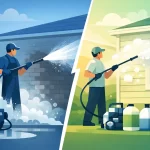


If your siding is turning green, your roof has dark streaks, or your deck looks older than it should, blasting everything with high pressure is not the smart fix. Eco friendly house washing is about getting real results without stripping paint, forcing water behind siding, or stressing the plants and surfaces around your home.
For Long Island property owners, that difference matters. Salt air, humidity, tree cover, and seasonal moisture create the perfect conditions for algae, mildew, mold, and moss. Those stains are not just cosmetic. Left alone, they can shorten the life of exterior materials and make a well-kept property look neglected fast.
What eco friendly house washing really means
A lot of companies use the phrase loosely. In practice, eco friendly house washing should mean three things. First, the cleaning method needs to match the surface instead of treating every part of the property the same. Second, the products should target the organic growth causing the staining, not just rinse off the visible layer. Third, the process should reduce the risk to landscaping, painted finishes, shingles, and surrounding hardscapes.
That is why soft washing is usually the better approach for residential exteriors. Soft washing uses low pressure and professional cleaning solutions to break down algae, mold, mildew, and other growth at the source. High pressure has its place on some hard surfaces, but on siding, roofs, soffits, trim, and many painted areas, too much force creates avoidable problems.
An eco friendly result is not just about what is in the cleaning mix. It is also about how the work is done. Controlled application, proper dilution, surface knowledge, and careful rinsing all matter. A careless job can waste water, damage plants, and leave behind streaks or missed patches.
Why high pressure is often the wrong choice
Many homeowners assume pressure equals clean. That sounds reasonable until you see what happens when the wrong nozzle and too much force hit vinyl siding, asphalt shingles, wood, or older painted surfaces.
Pressure can drive water up behind siding. It can loosen granules on shingles. It can leave etched marks on wood and concrete. It can also remove oxidation unevenly, leaving a patchy appearance that looks worse in direct sunlight. On delicate surfaces, the quick fix can become a repair bill.
This is where eco friendly house washing stands apart. The goal is not to overpower the stain. The goal is to treat what is causing it. When algae and mildew are killed at the root, surfaces stay cleaner longer than they do after a basic rinse or aggressive surface blast.
That matters if you are trying to protect curb appeal and avoid repeat cleanings every few months. A method that lasts longer is usually the better value, even if the upfront price is not the cheapest option on paper.
The stains on your home are usually alive
Dark streaks, green patches, black spotting, and slippery buildup are often signs of living organic growth. Mold, mildew, algae, moss, and lichen thrive in the exact places many Long Island homes struggle with most – shaded elevations, north-facing walls, damp roof sections, under gutters, and around landscaping.
If you only remove the surface layer, the stain comes back quickly because the root problem was never addressed. That is why a professional wash should do more than improve appearance for a week or two. It should sanitize the surface enough to slow regrowth and restore a cleaner, brighter finish.
There is some nuance here. Not every stain is organic. Rust, battery runoff, irrigation overspray, hard water deposits, and oxidation need different treatment. A dependable contractor knows the difference before applying anything. That is one reason a one-size-fits-all approach rarely works well.
Where eco friendly house washing works best
The safest and most effective cleaning method depends on the material. Siding is a good example. Vinyl, painted wood, stucco, and composite exteriors usually respond well to low-pressure soft washing because the cleaner does the heavy lifting, not brute force.
Roof cleaning is another area where the wrong method causes real damage. Asphalt shingles should not be hammered with high pressure. A proper soft wash removes black streaks and organic buildup while helping preserve the roof surface. For homeowners trying to protect a major investment, that is the kind of detail that matters.
Decks, fences, pavers, driveways, and concrete pads are a little more situational. Some of these surfaces can handle pressure when it is calibrated correctly, but even then, pressure should be used with control. Eco friendly cleaning is not anti-pressure. It is anti-mistake. The right contractor knows when to use soft washing, when to use surface cleaning, and when to combine methods.
What to look for in a professional service
If a company talks only about power and speed, keep asking questions. A reliable exterior cleaning contractor should be able to explain why a certain method is right for your siding, roof, deck, or concrete. They should also be clear about plant protection, runoff control, and what kind of results you can realistically expect.
You also want a company that understands that clean is not the same as undamaged. Fast work means nothing if shutters are loosened, window seals are stressed, or landscaping is burned because the prep was sloppy. The best crews protect the property before they start and clean with a plan.
Guarantees help too, especially when they are tied to specific services. Confidence matters in this business because homeowners are trusting a contractor with visible, expensive parts of the property. A company that stands behind the work is usually telling you something about its process.
The environmental side homeowners actually care about
Most people are not looking for a chemistry lesson. They want to know two things. Is this safe for my home, and is it safe for the areas around it?
That is a fair question. Eco friendly house washing should balance cleaning strength with responsible application. That means using solutions that are effective against organic growth without overapplying them, protecting nearby plants through pre-wetting and rinsing, and avoiding the wasteful habits that come with amateur work.
It also means fewer repeat cleanings caused by poor technique. A wash that handles the root of the stain can reduce how often you need service. Over time, that can mean less water use, less product use, and less wear on the home.
For families, pet owners, and commercial property managers, that practical side of eco-friendly service is usually more meaningful than vague green claims. People want cleaning that works and does not create a second problem.
Why local experience matters on Long Island
Exterior cleaning is not the same in every market. Homes in Nassau County and Suffolk County deal with a mix of coastal moisture, heavy pollen, shaded lots, storms, and seasonal grime that can wear down appearance fast. The right method in a dry climate may be the wrong one here.
Local experience helps with diagnosis. It helps with timing. It also helps with material awareness, since many Long Island properties combine older finishes with newer additions, and each surface may need a different approach. A contractor that understands those conditions is more likely to clean thoroughly without taking risks.
That is why companies built around soft washing tend to give property owners a stronger long-term result. Supreme Clean Power Washing, for example, centers its service around low-pressure cleaning because it is safer for many exterior materials and more effective against the mold, algae, and mildew that keep coming back.
When it makes sense to schedule service
If you can clearly see staining, you are already in the window to schedule. Waiting rarely improves the situation. Organic growth spreads, holds moisture, and makes surfaces look older than they are. In some cases, buildup can even create slick walking areas around entryways, patios, and decks.
Spring and fall are common times for cleaning, but the best timing depends on shade, tree coverage, and how quickly buildup returns to your property. A heavily shaded home may need more frequent attention than one with full sun and better drainage. This is where honest advice matters. Not every property needs the same schedule.
A good exterior wash should make your home look noticeably better right away. A great one should also help protect what you paid for. If the method is safe, the results last, and the surfaces are treated correctly, eco friendly house washing is not just a nicer option. It is the smarter one.
Your home does not need more pressure. It needs the right process.