
Black streaks on a roof are not just an eyesore. On Long Island, they usually mean algae is feeding on your shingles, holding moisture where it does not belong, and slowly making the roof look older than it is. When property owners start comparing the best roof cleaning methods, the real question is not just what gets the roof clean today. It is what cleans it safely, keeps it cleaner longer, and avoids expensive damage.
What are the best roof cleaning methods?
The best roof cleaning methods depend on the roofing material, the level of staining, and what is growing on the surface. For most asphalt shingle roofs, soft washing is the clear front-runner because it treats algae, mold, mildew, and lichen at the source without the damage risk that comes with high pressure. Other methods, like manual moss removal or low-pressure rinsing, can help in certain cases, but they are not always enough on their own.
That is where many homeowners get tripped up. A roof can look dirty for different reasons, and each problem responds differently. Algae creates those dark streaks. Moss sits thick and green, often near shaded sections. Lichen digs in and clings hard. Dirt and pollen may wash off easily, but biological growth needs more than water. If the cleaning method does not kill the growth, the stains usually come right back.
Why pressure washing is usually the wrong choice
A lot of people assume pressure washing is the fastest way to clean a roof because it works well on concrete and some hard surfaces. On roofing, especially asphalt shingles, that logic falls apart fast. High pressure can strip away protective granules, loosen shingles, force water underneath the roofing system, and shorten the life of the roof.
Even if the roof looks cleaner right after the job, the damage can outlast the cosmetic improvement. That trade-off does not make sense for a surface that protects the entire building. This is why experienced exterior cleaning professionals steer away from high-pressure roof washing unless they are working with a specific material that can handle it and a method designed around that material.
Tile, metal, and some commercial roofing systems are different from asphalt shingles, but even then, more pressure is not automatically better. Safe cleaning always starts with the roof type, not the machine.
Soft washing: the safest and most effective method for most roofs
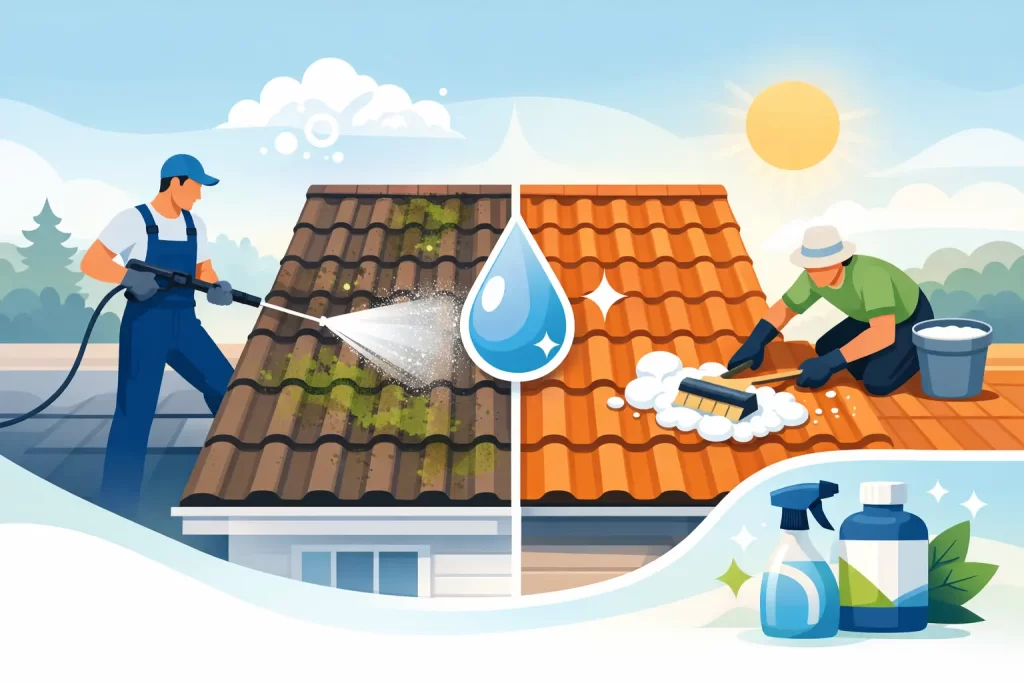
If you are looking for the best roof cleaning methods for a typical home, soft washing is usually the answer. Soft washing uses low-pressure application and specialized cleaning solutions to break down and kill algae, mold, mildew, moss, and lichen. Instead of blasting stains off the surface, it treats the root cause so the roof stays cleaner longer.
That matters because roof staining is usually a living problem, not just a cosmetic one. If you only rinse the surface, you may remove some of the discoloration but leave behind the organisms causing it. Soft washing addresses that directly.
Another advantage is surface protection. Asphalt shingles are designed to shed water, not take a beating from concentrated pressure. A properly performed soft wash cleans the roof without tearing into the material. For homeowners who care about curb appeal and long-term roof health, that is the smarter move.
This is also why professional roof cleaning companies often stand behind soft wash results with stronger guarantees. When the method is built around killing growth instead of just chasing appearance, the results tend to last longer.
Manual cleaning has a place, but it is limited
Manual roof cleaning usually means brushing off debris, gently removing thick moss by hand, or clearing surface buildup in problem areas. This can be useful when moss has grown heavily in one section and needs to be reduced before treatment. It can also help around roof edges, valleys, and shaded areas where buildup collects.
But manual cleaning on its own is rarely the full answer. Scraping or brushing may remove visible growth, yet leave spores and root structures behind. Go too aggressive, and you can damage shingles just as easily as with pressure. Used carefully, manual removal is a supporting step, not the main event.
For that reason, the best results often come from a combination approach. Remove what needs to be removed by hand, then apply a proper soft wash treatment to eliminate what you cannot see.
Low-pressure rinsing and chemical treatment
Some roof cleaning services use a low-pressure rinse after applying cleaning solutions. That can be effective when handled properly, especially for roofs with lighter staining or loose debris. The key point is that the rinse is not doing the heavy lifting. The treatment is.
This distinction matters because many companies advertise “low pressure” while still relying too much on water force. True roof-safe cleaning is chemical action first, pressure second. The cleaning solution should do the work of killing and loosening algae and organic growth so the rinse can stay gentle.
When that balance is off, the process becomes less safe and less effective. A roof may look cleaner for a short time, but staining can return quickly if the biological growth was not fully treated.
Best roof cleaning methods by roof type
Not every roof should be cleaned the same way. Asphalt shingles need the most caution because they are common and easy to damage. Soft washing is the preferred method in most cases.
Metal roofs can often handle a bit more, but they still benefit from low-pressure washing and targeted treatment for algae and oxidation-related staining. Pressure that is too strong can damage coatings, seams, or fasteners.
Tile roofs are durable, but they are also brittle underfoot. Cleaning them is not just about water pressure. It is about safe access, proper footing, and avoiding cracked tiles. Soft washing is still a strong option here because it controls organic growth without adding unnecessary stress.
Cedar shake roofs are another category entirely. They need a tailored approach because wood reacts differently to moisture, agitation, and cleaners. This is not a roof type for guesswork.
The point is simple. The best method is the one that matches the material and solves the actual problem without creating a new one.
How to tell if a roof cleaning method is safe
A safe method should do three things. It should remove or kill the staining source, protect the roofing material, and deliver results that last longer than a quick cosmetic fix. If a contractor talks mostly about blasting stains away, that is a red flag.
Ask how they handle algae, moss, and lichen. Ask whether they use high pressure on shingles. Ask what kind of result you should expect in a few months, not just the day after service. A reliable company should have direct answers and no hesitation about the risks of improper cleaning.
For property owners in Nassau County and Suffolk County, this matters even more because the local climate gives algae and mildew plenty of opportunity to grow. Humidity, shade, tree coverage, and coastal moisture all work against your roof. The cleaning method has to account for that.
DIY roof cleaning versus professional service
DIY roof cleaning sounds straightforward until you factor in ladder risk, roof pitch, slippery organic growth, and the chance of using the wrong products or too much pressure. Even if you avoid injury, many off-the-shelf approaches only improve the appearance without solving the underlying growth.
Professional service makes more sense when the roof is steep, heavily stained, moss-covered, or made from materials that require a controlled process. It also makes sense when you want a result that protects your investment instead of gambling with it.
A company that specializes in soft washing brings more than equipment. It brings process. That includes choosing the right treatment strength, applying it evenly, protecting surrounding landscaping, and cleaning the roof without turning a maintenance job into a repair bill.
Supreme Clean Power Washing takes that approach seriously because roof cleaning should improve your property, not put it at risk.
When roof cleaning is worth doing
If the roof has black streaks, green patches, visible moss, or uneven discoloration, cleaning is usually worth it. The visual improvement alone can make a home or commercial property look better maintained. More importantly, removing biological growth helps reduce moisture retention and the wear that comes with it.
There is also a timing factor. Cleaning a roof before buildup gets severe is usually easier and safer than waiting until moss thickens and lichen spreads. Early treatment is less invasive, and the result is often better.
That does not mean every stain needs immediate action. Very old roofs or roofs near the end of their service life need an honest assessment. Sometimes cleaning helps. Sometimes replacement planning is the smarter investment. A trustworthy contractor will tell you the difference.
The best roof cleaning methods are the ones that respect the roof first. If a method promises instant results but risks shingle damage, water intrusion, or shortened roof life, it is not a bargain. For most homes and many commercial buildings, soft washing remains the safest, most effective way to remove stains and treat the cause behind them. A clean roof should not come at the cost of the roof itself.