
That green film on your driveway is not just an eyesore. It gets slick after rain, makes the front of your property look neglected, and keeps spreading if you leave it alone. If you are figuring out how to remove driveway algae, the right method matters just as much as the cleaner you use. Done properly, you get a brighter, safer surface. Done carelessly, you can scar concrete, strip joint sand from pavers, or force more moisture into the surface.
Why driveway algae keeps coming back
Algae thrives where moisture lingers. On many Long Island properties, that means shaded sections of the driveway, low spots where water sits, areas near sprinkler overspray, and spots under trees where sunlight is limited. If your driveway faces north or stays damp after storms, algae has exactly the conditions it wants.
The mistake many property owners make is treating algae like ordinary dirt. It is biological growth, which means it needs more than a quick rinse. If you only blast away the top layer, the staining may lighten for a while, but the growth often returns because the root cause was never addressed.
That is why professional exterior cleaning companies focus on killing the organic growth first, then washing the surface with the right pressure for the material. The goal is not just to make the driveway look better for a weekend. The goal is to clean it in a way that helps it stay cleaner longer.
How to remove driveway algae without damaging the surface
The safest method depends on what your driveway is made of. Concrete can handle more than delicate pavers, but even concrete can be etched if pressure is too aggressive or held too close to the surface. Asphalt is even more sensitive and can lose its protective top layer under improper washing.
In most cases, the best approach starts with a cleaning solution designed to break down algae. This does the heavy lifting by attacking the growth instead of relying on brute force. After the solution has had time to work, the surface is rinsed and cleaned with controlled pressure. That combination is what removes the staining while reducing the risk of damage.
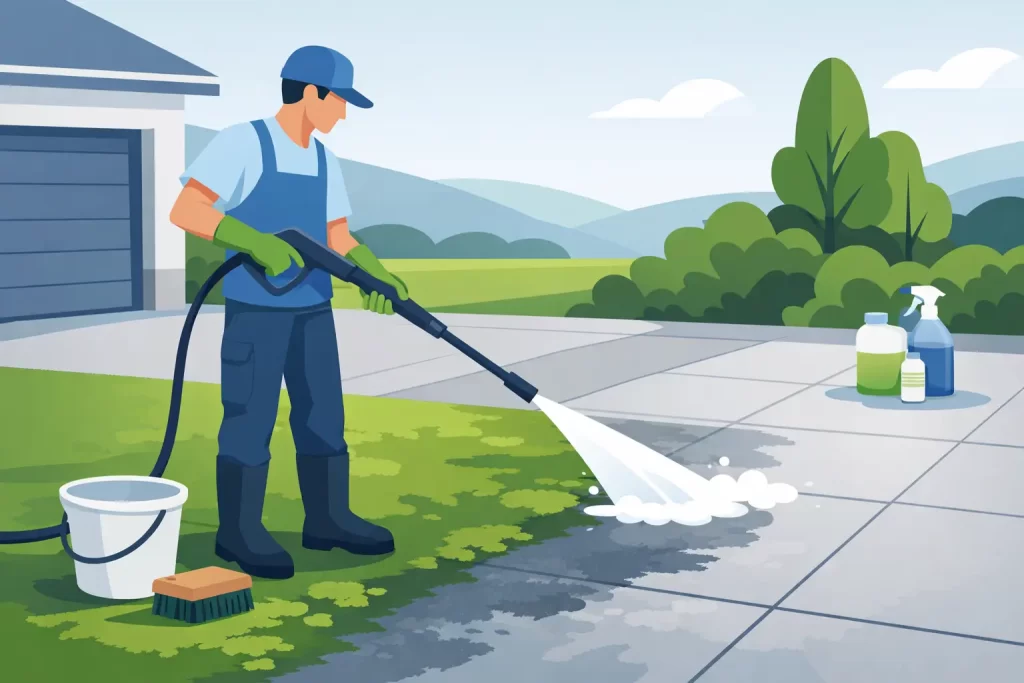
If you are cleaning it yourself, start by clearing the driveway of vehicles, planters, and loose debris. Pre-wet nearby grass and landscaping so any runoff is diluted. Apply a driveway-safe algae treatment evenly across the affected area and give it enough dwell time to work. Then rinse with moderate pressure, keeping the wand moving so you do not create lines or gouges.
This is where a lot of DIY jobs go wrong. Homeowners often assume more pressure means a better result. In reality, too much pressure can leave visible striping, expose aggregate in concrete, and shorten the life of the surface. On paver driveways, it can also wash out the joint sand that helps keep the system stable.
Pressure washing vs soft washing
People often use these terms like they mean the same thing, but they do not. Pressure washing relies on water force to remove buildup. Soft washing relies more on specialized cleaning solutions and much lower pressure to kill algae, mold, and other organic growth at the source.
For driveways, the right job often uses both ideas in the right order. The algae should be treated first. Then the surface can be cleaned with enough pressure to remove residue and restore appearance without causing unnecessary wear. That is why experienced contractors do not treat every driveway the same. They adjust the method based on the material, the age of the surface, and the severity of the buildup.
The cleaners that work and the ones to avoid
If you are searching for how to remove driveway algae, you will see everything from dish soap to straight bleach recommended online. That advice is all over the place because not every cleaner is safe for every surface or every property.
A proper exterior cleaning solution made for algae removal is usually the best choice. It is designed to break down organic growth efficiently and rinse clean. Household products can be less predictable. Some do not kill the algae fully. Others can discolor nearby surfaces, damage plants, or leave you with a patchy result.
Bleach-based solutions can be effective when they are correctly diluted and professionally applied, but this is not an area for guesswork. Too strong, and you risk harming landscaping or creating uneven cleaning marks. Too weak, and you do little more than wet the surface.
Vinegar is often mentioned as a natural option, and it can help on very light growth in small areas. The trade-off is that it is usually slower and less effective on established algae staining. If your driveway is heavily discolored or slick, a stronger, driveway-safe treatment is typically the more realistic solution.
When DIY makes sense and when it does not
A small patch of algae on a newer concrete pad may be manageable if you have the right cleaner, a decent machine, and time to do it carefully. If the driveway is large, heavily stained, made of pavers, or part of a higher-end property where appearance matters, professional cleaning is usually the smarter move.
The reason is simple. Surface cleaning looks easy until a bad pass leaves permanent marks. Once concrete is etched, there is no quick fix. Once paver joints are disturbed, you may need more than just cleaning to make the driveway look right again.
Professional service also makes more sense when algae is not the only issue. Many driveways have a mix of algae, mold, black staining, rust, tire marks, and general grime. Each one responds differently, and using one harsh method for all of it can create more problems than it solves.
How to keep algae from coming back fast
Cleaning is only half the job. If the moisture conditions stay the same, algae will eventually return. The question is how quickly.
The first step is improving drainage if you have standing water. Even minor grading issues can keep a driveway damp for days longer than it should be. Cutting back overhanging trees and shrubs can also help by increasing sun exposure and airflow. If sprinklers are hitting the driveway every morning, adjusting them can make a noticeable difference.
Regular maintenance matters too. Blowing off leaves, dirt, and organic debris keeps the surface from holding moisture. A driveway that stays clean and dries faster is simply less inviting to algae.
For some surfaces, periodic professional cleaning is the most practical long-term plan. That is especially true in shaded areas and coastal climates where humidity gives algae a head start. On Long Island, where weather and moisture shifts are part of property maintenance, waiting until the driveway is fully green usually means a harder cleaning job than necessary.
What a professional driveway cleaning should include
Not every exterior cleaning company approaches driveway algae the right way. If a contractor talks only about blasting the surface, that is a red flag. The better approach is surface-specific cleaning that targets the algae first and uses only the pressure needed to finish the job.
A solid professional service should include an inspection of the driveway material, pre-treatment for algae and other organic growth, controlled cleaning methods, and care around surrounding grass, beds, and hardscapes. On paver driveways, it should also account for protecting or restoring joint sand if needed.
This is where an experienced company stands out. A dependable contractor knows that cleaning is not just about immediate appearance. It is about protecting the surface while delivering the visible improvement you paid for.
For property owners in Nassau County and Suffolk County, that matters. Driveways are a major part of curb appeal, and a badly cleaned entrance can hurt the look of the entire property just as quickly as a properly cleaned one can improve it.
How to remove driveway algae and get lasting results
If you want the short answer on how to remove driveway algae, it is this: treat the growth first, use the right pressure for the material, and fix the moisture conditions that caused it. That is the difference between a driveway that looks clean for a few days and one that stays cleaner longer.
There is no one-size-fits-all method. Concrete, pavers, and asphalt each require a different level of care. Light buildup may respond to a careful DIY approach, but heavy growth, delicate surfaces, and high-visibility properties usually call for professional equipment and experience.
A clean driveway changes more than the color of the surface. It makes the property look cared for, improves safety, and helps prevent the kind of neglect that leads to bigger maintenance issues later. If your driveway has gotten slippery, stained, or stubbornly green, taking care of it now is a lot easier than letting another season of algae take over.