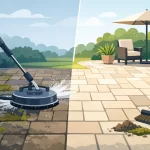


A driveway can make a home look neglected long before anyone notices the roof, siding, or landscaping. Tire marks, black algae, oil spots, salt residue, and embedded dirt create a dull, blotchy entrance that pulls attention away from the rest of the property. Understanding how driveway washing improves curb appeal starts with recognizing one simple fact: your driveway is one of the largest visible surfaces on your property.
For Long Island homeowners, that surface takes a beating through every season. Winter deicing materials, spring pollen, summer humidity, falling leaves, vehicle leaks, and foot traffic all leave their mark. Professional driveway cleaning removes the buildup that ordinary rinsing cannot touch, helping the entire front of the home look cleaner, brighter, and better maintained.
Your Driveway Sets the Tone From the Street
Visitors, neighbors, buyers, and delivery drivers usually see the driveway before they see your front door. When it is darkened by grime or covered in green and black organic growth, even a well-kept home can appear older than it is. A clean driveway creates a clearer visual path to the house and makes details such as landscaping, walkways, stonework, shutters, and entry doors stand out for the right reasons.
This is not just about making concrete look lighter. Washing restores contrast. The edges of the driveway become more defined, the natural tone of concrete or pavers is easier to see, and the property looks cared for from the curb to the garage. That visible difference is why driveway cleaning often delivers one of the fastest exterior transformations homeowners can make.
For commercial properties, the effect is just as practical. A cleaner entry and parking area tells customers that the business takes maintenance seriously. Property managers also benefit from a more polished appearance without the expense and disruption of replacing stained pavement.
How Driveway Washing Improves Curb Appeal Beyond Surface Dirt
A dirty driveway is rarely just dusty. Most stubborn discoloration comes from several sources layered together over time. Organic growth such as algae, mildew, moss, and lichen thrives in shaded or damp areas. Oil and automotive fluids penetrate porous concrete. Rust, fertilizer, leaf tannins, and deicing products can leave distinct stains that change the color of the surface.
Professional washing addresses these causes instead of simply blasting the top layer of dirt away. The right cleaning solution helps break down organic contamination and lift grime before the surface is rinsed with properly controlled pressure. This produces a more even result and helps prevent the streaky, patchy appearance that can happen when a driveway is cleaned too aggressively or too quickly.
The improvement is especially noticeable around garage doors, parking areas, driveway edges, and sections shaded by trees. These are the places where moisture lingers and stains become most visible. Once they are cleaned, the driveway looks consistent again rather than like a collection of dark spots and traffic lanes.
Clean Pavement Makes the Entire Property Look Better Maintained
Curb appeal is cumulative. A freshly washed driveway supports the appearance of every nearby exterior feature. It can make a clean roofline look sharper, help refreshed siding appear brighter, and prevent a carefully landscaped yard from being overshadowed by a stained concrete slab.
This matters if you are preparing to sell, hosting family, planning an event, or simply tired of pulling into a property that does not reflect the care you put into it. Buyers often form an opinion before a showing begins. While driveway washing cannot replace needed repairs, it can remove a major visual distraction and help the property present more confidently.
There is also a practical maintenance signal at work. A clean driveway suggests that the property is regularly cared for. For homeowners associations, landlords, and commercial managers, that impression can be valuable when appearance standards matter.
The Right Method Protects Concrete, Pavers, and Nearby Surfaces
Many property owners assume the highest pressure will produce the best cleaning result. That is not always true. Excessive pressure can leave wand marks in concrete, strip joint sand from pavers, damage aging surfaces, force water where it does not belong, or create uneven lines that are difficult to correct.
A professional approach uses the cleaning method that matches the material and condition of the driveway. Concrete may need pretreatment and controlled surface cleaning to remove embedded grime evenly. Pavers require added care around joints and edging. Stains such as oil, rust, or organic growth may need targeted treatment rather than more pressure.
Soft washing also has an important role around surrounding areas. While the driveway itself may require measured pressure, low-pressure cleaning solutions can safely treat nearby siding, fencing, stone borders, and other surfaces affected by organic growth. The goal is not to use one setting for every job. The goal is a clean result without unnecessary surface damage.
At Supreme Clean Power Washing, driveway work is approached as part of the property’s full exterior appearance, not as a quick rinse with a pressure washer. That means evaluating the stains, the surface material, drainage conditions, and nearby landscaping before cleaning begins.
A Safer, Cleaner Driveway Has Everyday Benefits
Curb appeal may be the first reason to schedule service, but cleaner pavement can also be easier and safer to use. Algae and mildew can become slick when wet, particularly on shaded driveways, walkways, and areas near downspouts. Removing that buildup helps reduce the slippery film that develops after rain or morning dew.
Regular cleaning can also make future maintenance easier. When dirt, algae, and vehicle residue are allowed to sit for years, stains can become more deeply embedded and harder to remove. Cleaning on a sensible schedule prevents buildup from becoming the dominant feature of the surface.
How often you need service depends on conditions. A sunny driveway with little tree cover may stay clean longer than one under mature trees or near a damp section of the yard. Homes near busy roads may collect more dust and road grime. In many cases, an annual cleaning is a practical starting point, while heavily shaded or high-traffic areas may need attention sooner.
What a Professional Driveway Cleaning Should Address
A quality service should do more than brighten the middle of the driveway. The finished result should look consistent across the surface, including the areas that are easiest to overlook. Before scheduling, ask whether the service accounts for the material, active organic growth, specific stain types, and protection for adjacent landscaping.
The following conditions usually deserve special attention:
- Black algae, green mildew, moss, or lichen in shaded sections
- Oil spots and tire marks near garage entrances and parking areas
- Rust stains from metal furniture, irrigation, or fertilizer products
- Leaf stains, salt residue, and dirt buildup along driveway edges
- Paver joints, curbs, walkways, and borders that need a consistent finish
Not every stain disappears completely in one visit. Older oil stains, deep rust, permanent discoloration, and damage caused by chemical spills can require specialized treatment or may leave some residual marking. A dependable contractor should set realistic expectations while still using the most effective process for the condition of the surface.
Timing Your Driveway Washing for the Best Visual Impact
Driveway cleaning is useful whenever buildup becomes noticeable, but timing it around other exterior projects can make the improvement feel even bigger. Many homeowners schedule it after winter to remove salt, sand, and grime. Others clean in late spring before outdoor gatherings or in early fall before leaves and wet weather create another layer of stains.
If you are washing siding, cleaning a roof, refreshing a deck, or improving landscaping, include the driveway in the plan. Cleaning the largest ground-level surface after nearby exterior work can give the property a finished, intentional appearance. It also prevents a newly cleaned home exterior from being framed by a dark, dirty entrance.
A clean driveway does not need to be a major renovation to make a major first impression. When stains, algae, and traffic grime stop competing for attention, the property itself gets to do the talking. If your driveway no longer matches the standard of the rest of your home or business, a professional assessment can help you choose a safe cleaning method and bring back the welcoming look people notice first.