
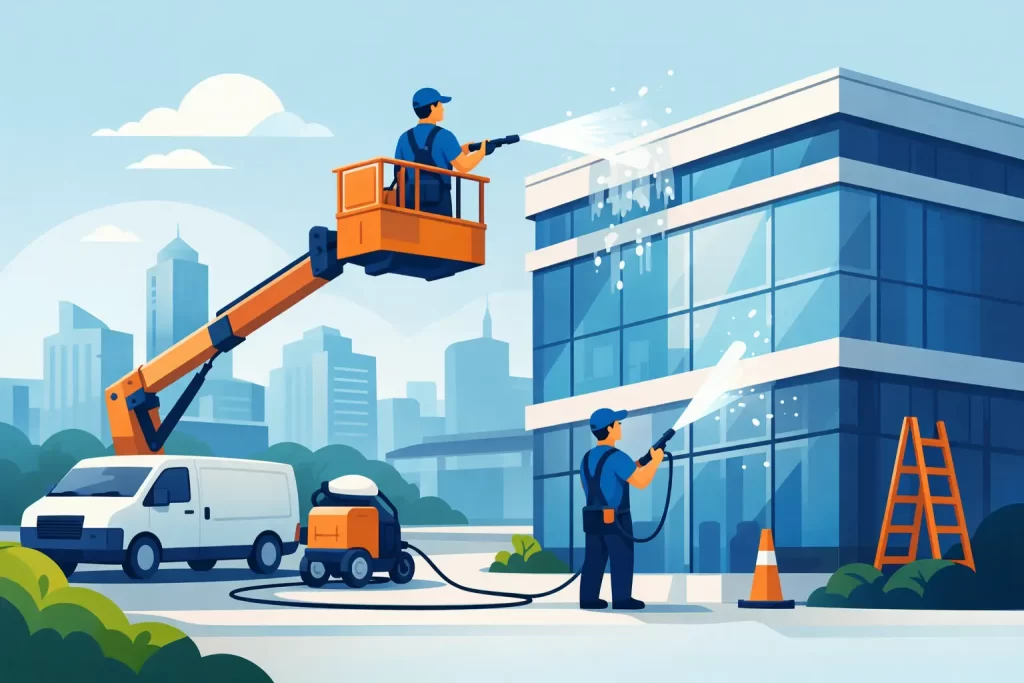
A dirty storefront, streaked façade, or algae-covered walkway sends a message before a customer, tenant, or client reaches the door. This guide to commercial building washing explains how property owners and managers can restore that first impression without risking costly damage to siding, masonry, awnings, roofing, concrete, or landscaping.
Commercial washing is not simply about spraying everything with more pressure. The right approach depends on the surface, the type of staining, building access, surrounding foot traffic, and the source of the problem. On Long Island, moisture, shade, salt air, pollen, and seasonal weather can create stubborn buildup that returns quickly when it is only rinsed off instead of properly treated.
Why Commercial Building Washing Is Property Protection
Your building exterior works hard. It faces rain, wind-blown dirt, vehicle exhaust, organic growth, bird droppings, pollen, and winter grime every year. Left in place, contaminants can discolor finishes, make sidewalks slippery, hold moisture against certain materials, and weaken the professional appearance of the property.
Algae, mold, mildew, moss, and lichen are especially common on shaded or damp surfaces. These are not just cosmetic stains. They can spread across vinyl, painted surfaces, composite materials, concrete, roof components, and exterior trim. A proper cleaning process addresses the organic growth at its source rather than blasting the visible layer away and leaving material behind.
For retail centers, office buildings, medical facilities, apartment communities, warehouses, restaurants, and managed properties, routine exterior washing supports a cleaner brand image and reduces preventable maintenance concerns. It also gives property managers a clearer view of cracks, damaged caulk, deteriorating paint, and drainage issues that dirt may be hiding.
Guide to Commercial Building Washing Methods
The method matters as much as the cleaning itself. High-pressure washing has a place, but it is not the right answer for every exterior. Using too much pressure on the wrong surface can force water behind siding, strip paint, scar wood, damage sealants, etch soft masonry, and create expensive repairs.
Soft Washing for Delicate Exterior Surfaces
Soft washing uses low pressure combined with professional cleaning solutions to treat algae, mold, mildew, and other organic stains. It is generally the safer choice for siding, stucco, painted exteriors, awnings, roof surfaces, trim, and many composite materials.
Instead of relying on force, soft washing allows the solution to break down the growth causing the discoloration. The surface is then rinsed at controlled pressure. This produces a cleaner, more even result while reducing the risk associated with aggressive pressure washing.
Soft washing is particularly valuable where a property has visible green algae, black streaks, mildew staining, or large areas of uneven discoloration. The exact solution strength and dwell time should be adjusted to the surface and condition. A one-size-fits-all mix is not professional surface care.
Pressure Washing for Durable Hardscapes
Pressure washing is effective for durable materials such as concrete sidewalks, loading areas, parking pads, curbs, retaining walls, some brick, and certain pavers. These areas collect tire marks, gum, grease, dirt, salt residue, and organic buildup that can make an otherwise clean property look neglected.
Even here, more pressure is not always better. Concrete can be etched by improper technique, and pavers can lose joint sand if they are cleaned carelessly. Grease stains may need pretreatment, while heavily soiled walkways often benefit from a surface cleaner that produces a consistent finish without leaving visible wand marks.
The best commercial cleaning plan often combines both methods: soft washing for the building exterior and targeted pressure washing for concrete, masonry, dumpster areas, and other durable surfaces.
Start With a Professional Site Assessment
Before work begins, inspect the full property. The visible front elevation is only part of the job. Walk the site and identify building materials, stain types, water access, electrical fixtures, landscaping, drainage paths, fragile surfaces, and areas where customers or employees may be moving through the property.
A professional assessment should answer practical questions. Is the staining organic growth or traffic pollution? Is there oxidized siding that requires a gentler approach? Are there loose gutters, failing caulk lines, damaged masonry joints, or exposed electrical components? Will wastewater run toward a storm drain, planting bed, or entrance?
The answers determine the cleaning method, equipment, scheduling, and precautions. A building with heavy algae in a shaded rear section needs a different treatment than a sun-exposed retail façade with road film and rust stains.
Protect People, Landscaping, and Building Components
Commercial work has more moving pieces than a typical residential cleaning project. Safety and site protection should never be an afterthought. Entrances, walkways, loading zones, and parking areas may need to be temporarily blocked or cleaned during lower-traffic hours. Clear communication with tenants, employees, and customers prevents avoidable disruptions.
Plants and landscaping near the building require preparation and rinsing before, during, and after cleaning. Exterior outlets, cameras, signage, door hardware, vents, and sensitive fixtures should be inspected and protected as needed. Windows and doors should be checked for failed seals or open gaps before cleaning begins.
A responsible contractor also controls runoff and follows applicable local requirements. Eco-friendly cleaning solutions can be highly effective, but they still need to be applied correctly, at the right dilution, and with care for nearby landscaping and drainage.
Know When Stains Need More Than Washing
Not every mark disappears with a standard building wash. Rust, oxidation, efflorescence, paint overspray, mineral deposits, graffiti, and oil stains may require specialized products and procedures. Trying to remove these stains with high pressure alone can make the surface look worse.
Oxidation is a common example on aging vinyl and painted metal. It can appear as a chalky, faded layer and may react differently than dirt or mildew. A technician should test a small area before treating the entire surface. The same is true for older brick, historic materials, loose mortar, and delicate stucco.
This is where honest expectations matter. A professional cleaning can create a major visible transformation, but washing cannot repair cracked siding, faded paint, damaged sealant, or permanently etched concrete. Good service identifies those issues clearly instead of promising an unrealistic result.
Set a Commercial Cleaning Schedule That Fits the Property
There is no single schedule for every commercial property. A busy restaurant, medical office, retail storefront, or apartment complex may need frequent sidewalk and entrance cleaning because those areas take constant abuse. A low-traffic office building may need a full exterior wash less often but still benefit from annual inspections.
For many Long Island properties, an annual building wash is a practical starting point. Shaded buildings, tree-lined lots, coastal locations, and properties with recurring algae or mildew may require more frequent soft washing. Sidewalks, dumpster pads, loading areas, and high-traffic entrances may need service seasonally or as conditions demand.
A consistent maintenance plan is usually more cost-effective than waiting until staining becomes severe. Early cleaning protects curb appeal and reduces the effort needed to restore heavily neglected surfaces.
What to Ask Before Hiring a Commercial Washing Company
Commercial property owners should look beyond the lowest price. Ask whether the company identifies surface materials before cleaning, uses soft washing where appropriate, carries proper insurance, protects landscaping, and provides a clear plan for access and traffic control.
It also helps to ask what is included in the estimate. Confirm which elevations, sidewalks, awnings, gutters, entrance areas, or concrete surfaces are being cleaned. If stains require specialty treatment, make sure that is discussed before work begins. A detailed estimate avoids confusion and helps you compare services fairly.
Supreme Clean Power Washing approaches commercial exterior cleaning with the same focus that property owners expect: safe methods, visible results, competitive rates, and clear communication from the estimate through the final walkthrough.
A clean commercial exterior does more than improve a photograph or prepare a building for a showing. It tells customers, tenants, and visitors that the property is cared for. Choose a washing plan that treats the cause of staining, protects the materials you have invested in, and keeps your building ready to make a strong first impression every day.
