
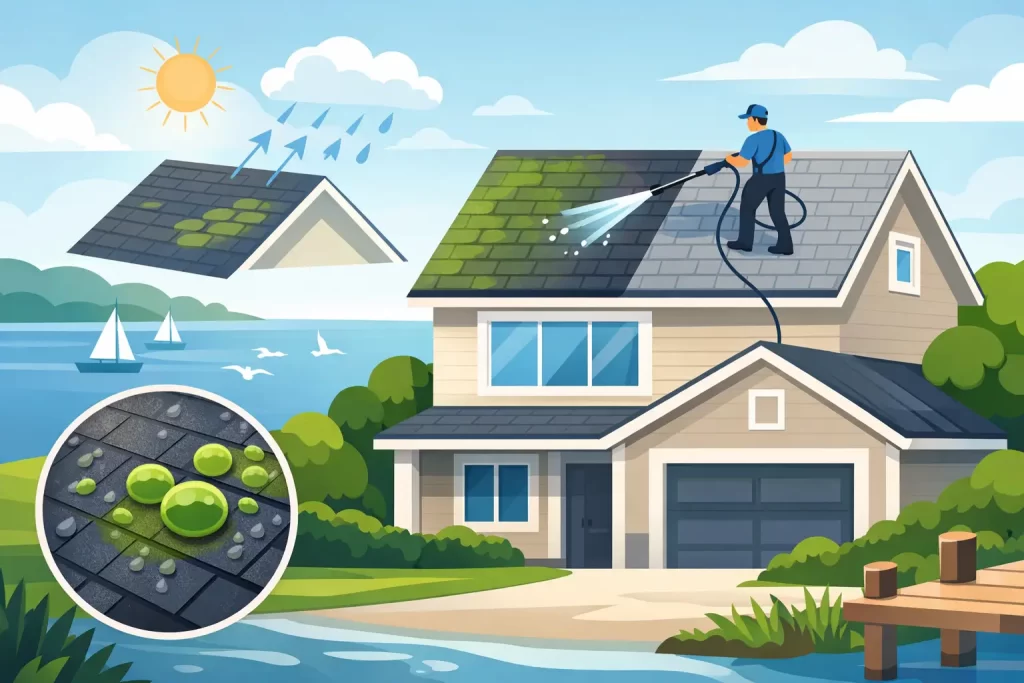
Green film on vinyl siding, dark roof streaks, and slippery patches on a walkway are not just cosmetic problems. On Long Island, humid summers, coastal moisture, tree cover, and frequent seasonal weather changes give algae the conditions it needs to return quickly. This guide to algae stain prevention explains what causes recurring stains and how homeowners and property managers can protect exterior surfaces before buildup turns into a bigger maintenance issue.
Algae is persistent because it does not need much to grow. A little moisture, shade, and airborne organic material can be enough. The best approach is not repeatedly blasting away visible stains. It is reducing the conditions that allow algae to establish itself in the first place, then using the right cleaning method when preventive maintenance is needed.
Why Algae Keeps Returning to Exterior Surfaces
Algae spores travel through the air and settle on virtually every outdoor surface. Growth becomes visible when a surface remains damp long enough and receives limited direct sunlight. That is why the north side of a home, shaded roof sections, fence lines, and concrete near landscaping often stain first.
Long Island properties face several common triggers. Overhanging branches restrict sunlight and drop leaves, pollen, and small debris onto roofs and siding. Gutters that overflow or downspouts that discharge too close to the foundation keep nearby areas wet. Sprinklers can repeatedly soak a wall, deck, or paved surface. Salt air and changing weather near the coast can also leave behind moisture and residue that contribute to exterior grime.
The surface itself matters, too. Asphalt shingles have a granular texture that can hold moisture and organic particles. Wood decks absorb water when protective finishes wear down. Porous concrete traps dirt and spores in tiny openings. Vinyl siding is less porous, but its laps and shaded areas can still hold enough moisture for green staining to develop.
Guide to Algae Stain Prevention: Start With Moisture Control
Preventing algae begins with moving water away from the building and allowing exterior surfaces to dry. This is often more valuable than any single cleaning product because it addresses the condition algae needs most.
Inspect gutters at least twice each year, especially after heavy leaf drop. Gutters should drain freely, and downspouts should direct water away from siding, walkways, and foundation planting beds. If water spills over an edge during rain, it can leave concentrated algae stains down the exterior wall and create dark marks on the ground below.
Look closely at irrigation patterns as well. Sprinklers should water lawns and garden beds, not the side of the house. A sprinkler that hits siding for a few minutes every day may not seem serious, but that repeated moisture can create a predictable algae stripe over time. Adjust heads, timing, and coverage so surfaces have a chance to dry between waterings.
Roof drainage deserves special attention. Leaves and twigs that collect in valleys can hold moisture against shingles, while clogged gutters allow water to back up at the roof edge. Never scrape roofing materials or walk on a roof unless it is safe and necessary. A professional inspection and soft wash service are often the safer choice for steep roofs, older shingles, or widespread black streaking.
Reduce Shade, Debris, and Organic Food Sources
A shaded property may look beautiful, but dense tree cover can increase cleaning needs. Trim branches that hang over the roof or sit close to siding, provided the work can be done without harming the tree or creating a safety risk. Better airflow and more sunlight help surfaces dry faster, while fewer leaves and seed pods mean less material for algae to feed on.
Keep roof valleys, gutters, deck corners, and paved edges clear of leaves. This does not require constant sweeping. A regular seasonal cleanup is usually enough for most homes, with more frequent attention needed in heavily wooded areas. The goal is to prevent damp piles of debris from resting against the surface.
Landscaping should not touch the building. Shrubs pressed against siding trap humidity and make it difficult for the wall to dry after rain. Leave a reasonable gap between plants and the structure, and avoid piling mulch directly against siding or deck supports. These small changes improve airflow and make early staining easier to spot.
Clean Surfaces Before Stains Become Established
Waiting until algae is thick and dark makes every surface harder to restore. Light green spotting is the best time to act. Early maintenance usually requires less cleaning solution, less labor, and less risk of permanent discoloration.
The cleaning method must match the material. High pressure may be appropriate for certain durable concrete areas when used correctly, but it is not the answer for every job. Excessive pressure can scar wood, force water behind siding, strip paint, damage window seals, and remove protective granules from asphalt shingles. A roof should never be cleaned with aggressive pressure washing.
For roofs, siding, painted exterior surfaces, and delicate deck materials, low-pressure soft washing is the safer, more effective approach. Professional soft washing applies the proper cleaning solution at controlled pressure to treat algae at the root rather than simply knocking off the visible layer. That matters because surface-only cleaning can leave living growth behind, allowing stains to reappear sooner.
Supreme Clean Power Washing uses soft washing where it is the right method for the surface, helping property owners remove algae, mold, mildew, moss, and lichen without the unnecessary damage associated with high-pressure cleaning. For roof cleaning, the company also provides a 1-year spot-free limited warranty, giving homeowners added confidence in ongoing curb appeal and surface care.
Protect the Surfaces That Need Extra Attention
Different materials call for different preventive habits. Asphalt roofs benefit from clean gutters, trimmed branches, and professional algae treatment when streaks appear. If roof algae is a recurring issue, ask a qualified professional whether algae-resistant materials or approved preventative options make sense during future roof work. The right choice depends on roof age, shingle type, pitch, and the amount of shade around the property.
Wood decks need water management and a sound protective finish. If water no longer beads on the surface, the deck may be due for cleaning, drying, and resealing. Do not apply a sealer over algae or damp wood. That can trap discoloration and shorten the life of the finish.
Concrete driveways, patios, and walkways need special attention because algae makes them slippery. Keep edging and drainage clear, remove leaf buildup, and address green growth promptly. Sealing concrete can reduce how much moisture and dirt it absorbs, but it is not a permanent solution. A sealer must be appropriate for the surface and properly applied to clean, dry concrete.
Vinyl siding often stains below rooflines, near gutters, and behind shrubs. Check these zones after wet seasons. Gentle soft washing removes algae without the risk of driving water behind panels, which can happen when a pressure washer is used too close or at the wrong angle.
Set a Practical Maintenance Schedule
Most Long Island homes benefit from an exterior check in spring and again in fall. Walk the property after a heavy rain and look for overflowing gutters, puddles near walls, wet deck boards, or spots where runoff stains the siding. Those are clues that prevention should focus on drainage before the next algae season.
Professional exterior cleaning is usually needed every one to three years, but there is no universal schedule. A sunny, open property may stay clean longer. A home beneath mature trees, near water, or with a north-facing roof may require more frequent service. Commercial properties also need a schedule that considers foot traffic, safety, visible curb appeal, and the expectations of tenants or customers.
Avoid DIY shortcuts that cause costly damage. Bleach-heavy mixtures used without proper dilution can harm landscaping and exterior finishes. Rental pressure washers can create uneven cleaning patterns or damage surfaces in seconds. If staining covers a large area, appears on a roof, or returns repeatedly despite cleanup, professional evaluation is the sensible next step.
Algae prevention is not about chasing a perfectly clean exterior every week. It is about keeping water moving, limiting trapped debris, and treating early growth with methods that protect the materials you paid for. A well-maintained property stays safer underfoot, looks cared for from the street, and gives algae far fewer places to take hold.