
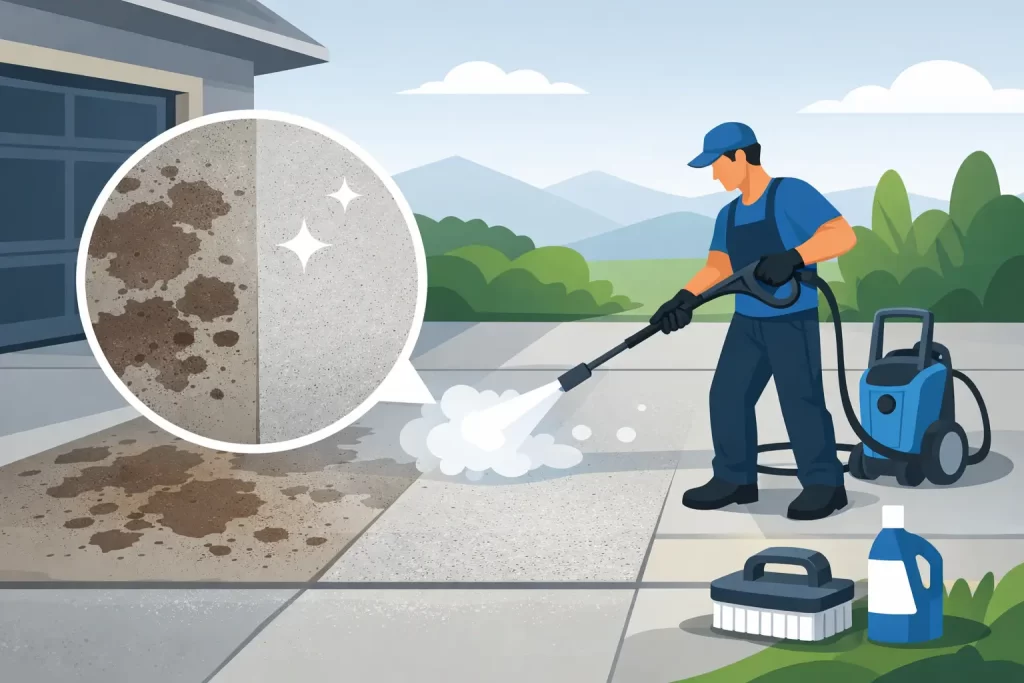
That dark patch on the driveway usually is not just dirt. Oil, rust, algae, tire marks, fertilizer stains, and organic buildup all bond to concrete differently, which is why a basic rinse rarely fixes the problem. A professional concrete stain removal service targets the actual cause of the stain, not just the surface color, so the concrete looks cleaner and stays cleaner longer.
For homeowners and property managers, that matters for more than appearance. Stained concrete makes an otherwise well-kept property look neglected, and in some cases, buildup creates a slippery surface that becomes a safety issue. Whether you are dealing with a front walk, pool deck, patio, or commercial entry, the right cleaning method can restore curb appeal without damaging the concrete in the process.
What a concrete stain removal service actually includes
A real stain removal service is not somebody showing up with maximum pressure and hoping for the best. Concrete is tough, but it is still a surface that can be etched, striped, or prematurely worn down by the wrong approach. The best results come from matching the cleaning method to the stain.
That starts with identifying what you are looking at. Oil and grease behave differently from rust. Algae and mildew need a different treatment than battery acid or irrigation stains. Even two driveways that look similar from the street can require different cleaning products and techniques once a professional tests the surface and sees how deeply the staining has set in.
Most quality service calls involve pre-treatment, controlled surface cleaning, targeted stain treatment, and a thorough rinse. In some cases, more than one round is needed. That is not a sign the process is failing. It usually means the stain has penetrated deeper into the porous surface and needs a more careful approach.
Why concrete stains are harder to remove than people expect
Concrete is porous. That is the whole problem.
When oil drips from a car or organic matter sits too long after wet weather, the material does not just stay on top. It sinks into tiny pores and holds there. On Long Island properties, that problem gets worse with seasonal moisture, shade, tree cover, and constant foot or vehicle traffic. A stain that starts small can spread, darken, and become much more difficult to remove over time.
Some stains also change the surface chemically. Rust can leave orange or reddish discoloration that does not respond to general washing. Fertilizer and irrigation minerals can leave stubborn white or yellow residue. Mold, algae, and mildew may look like surface grime, but they often keep coming back if the root growth is not fully treated.
This is where experience matters. If the wrong cleaner is used, it may do nothing at all, or it may lighten one area while leaving the rest uneven. If too much pressure is used, the stain may fade temporarily while the concrete ends up etched and more vulnerable to future buildup.
Common stains and what it takes to remove them
Oil and grease stains are some of the most common, especially on driveways and garage aprons. Fresh spills are easier to treat, but older ones often need degreasers and repeated cleaning to break down what has soaked below the surface. Full removal depends on how old the stain is and whether the concrete has been sealed before.
Rust stains usually come from metal furniture, irrigation systems, tools, or fertilizer exposure. These stains need specialized treatment. General pressure washing alone usually will not touch them.
Organic stains from leaves, algae, mold, and mildew are common on patios, pool decks, walkways, and shaded concrete. These respond best to proper soft wash treatment and surface cleaning, especially when the goal is not just to brighten the concrete but to remove the organic growth causing the discoloration.
Tire marks and black traffic stains often need more than water pressure. Heat, rubber transfer, and embedded grime can leave concrete looking dull even after a rinse. Professional cleaning can lift much of that buildup, but results vary based on how long it has been there and how worn the surface already is.
Paint, graffiti, and construction stains are a separate category. They can often be improved, but the process depends on the coating, the age of the spill, and the condition of the concrete underneath. Sometimes the goal is total removal. Other times the realistic goal is significant improvement without damaging the slab.
The difference between pressure washing and the right cleaning method
Many people assume concrete only needs higher pressure. That is where costly mistakes happen.
Pressure has a place in concrete cleaning, but more pressure does not automatically mean better results. In fact, high pressure without the right cleaner often removes only the loose top layer of grime while leaving the actual stain behind. Worse, it can scar the surface, create wand marks, and leave the concrete looking patchy.
A professional concrete stain removal service uses pressure where it makes sense, but not as a substitute for proper treatment. Organic growth may call for soft washing solutions that kill the root cause. Oil may need a degreasing pre-treatment. Rust may require a stain-specific product and controlled dwell time. The method should fit the stain, not the other way around.
That is one reason professional cleaning tends to last longer than a quick DIY wash. If the underlying cause is addressed, the improvement is not just cosmetic. It is more complete.
When DIY works and when it usually falls short
If a stain is fresh and small, DIY cleanup can help. Absorbing a fresh oil spill quickly, scrubbing a minor spot with the right cleaner, or rinsing away surface debris before it sets can all reduce long-term staining.
But once discoloration has been sitting for weeks or months, store-bought products and rental machines often produce mixed results. Many consumer cleaners are too weak for deep stains, and many rental pressure washers encourage a high-pressure approach that can leave visible lines or damage. That is especially risky on decorative concrete, older slabs, or surfaces near siding, landscaping, or entryways.
The other issue is time. Most property owners do not want to spend an entire weekend testing products, scrubbing one stain at a time, and ending up with only partial improvement. A trained crew can usually assess the stain faster, choose the right treatment, and clean the area evenly.
What to expect from professional results
The honest answer is that it depends on the stain.
A good contractor should never promise that every stain will disappear completely. Some marks have been in the concrete for years. Some surfaces have prior damage, low-quality finishing, or permanent discoloration that cleaning alone cannot reverse. What a professional should promise is an informed assessment, the safest effective method, and the strongest possible improvement without harming the surface.
In many cases, the results are dramatic. Driveways look brighter. Walkways lose those dark traffic lanes. Patios feel cleaner and safer underfoot. Commercial entrances regain a more professional appearance. Even when a deep stain cannot be erased 100 percent, reducing it substantially can make the whole property look better maintained.
That is a big part of why stain removal is worth doing before listing a home, opening a business for the season, or catching up on deferred exterior maintenance. Clean concrete changes how the entire property reads from the curb.
Choosing a concrete stain removal service
Look for a company that talks about stain type, surface condition, and cleaning method, not just equipment. That is usually the difference between a surface cleaner and a true exterior cleaning specialist.
You also want clear communication. A reliable contractor should explain what is causing the staining, what can likely be removed, and where results may vary. If they mention only blasting the surface, that is a red flag. Concrete cleaning should be controlled and intentional.
For properties in Nassau County and Suffolk County, it also helps to hire a company that understands local conditions. Coastal moisture, shaded lots, heavy pollen, and seasonal grime create patterns that show up over and over on Long Island concrete. Experience with those conditions often means faster diagnosis and better results.
Supreme Clean Power Washing approaches stain removal the same way it handles exterior cleaning across the property – with the right process for the surface, a focus on safety, and results that improve curb appeal without unnecessary damage.
If your concrete has gone from light discoloration to full-on eyesore, waiting usually makes the job harder. The better move is to address the stain while there is still a strong chance of lifting it cleanly and evenly. Clean concrete does not just look better. It tells people the property is cared for, and that always shows.

