
That black staining on a roof in Long Island usually is not just dirt. The green film on siding is not either. When property owners compare pressure washing vs soft washing, the real question is not which one sprays water harder. It is which method actually cleans the surface without shortening its life.
That distinction matters more than most people realize. The wrong cleaning method can leave behind streaks, force water where it should not go, strip protective finishes, or damage shingles, wood, and painted surfaces. The right method restores curb appeal while protecting the materials you paid good money for.
Pressure washing vs soft washing: what is the difference?
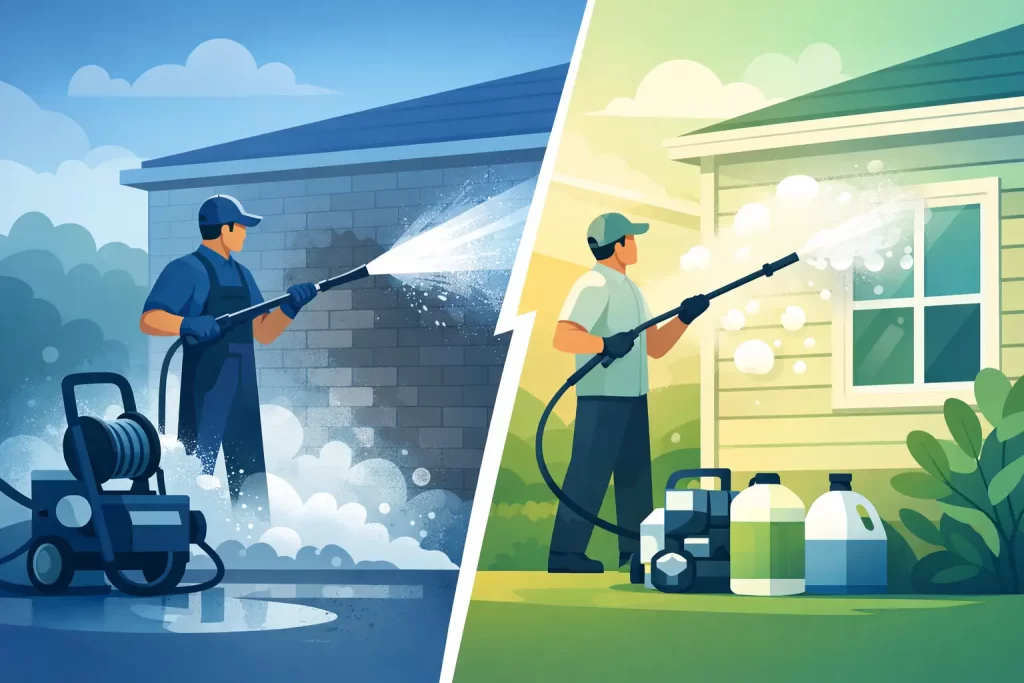
Pressure washing relies on high-pressure water to blast away buildup from hard surfaces. It can be very effective when the material is strong enough to handle that force. Think concrete driveways, some paver areas, certain masonry surfaces, and heavily soiled sidewalks. On the right surface, pressure washing cuts through dirt, grime, and surface stains fast.
Soft washing uses low pressure along with professional cleaning solutions that break down algae, mold, mildew, moss, and lichen at the source. Instead of relying on force, it relies on treatment. That makes it the safer choice for more delicate exterior materials such as asphalt shingle roofs, vinyl siding, painted surfaces, stucco, fences, and many deck surfaces.
This is where many homeowners get tripped up. They assume a stronger spray means a better clean. In reality, high pressure can remove surface grime while leaving the organic growth alive underneath. Soft washing does the opposite. It treats the cause of the staining, which helps surfaces stay cleaner longer.
Why soft washing is often the better choice
For many residential exteriors, especially roofs and siding, soft washing is not the backup option. It is the correct option. If you are dealing with roof streaks, green algae, mildew on siding, or buildup on trim, blasting the surface with pressure is usually the wrong move.
High pressure can dislodge granules from asphalt shingles, crack older siding, scar wood, and drive water behind exterior panels. That creates bigger problems than the stains you started with. Soft washing avoids that risk by using a low-pressure application that cleans thoroughly without putting the material under unnecessary stress.
It also delivers a deeper clean. Organic growth is a living contaminant. If you only knock off the visible layer, it tends to come back fast. Soft washing addresses that growth more completely, which is one reason many property owners see better long-term results.
For a place like Long Island, where humidity, salt air, tree coverage, and seasonal moisture all work against your exterior surfaces, that matters. A cleaning method that only improves appearance for a few weeks is not much of a value.
When pressure washing makes sense
Pressure washing still has a place. A solid concrete driveway with years of embedded grime often benefits from high-pressure cleaning. The same goes for many walkways, curbs, parking areas, and other durable hardscapes that can safely tolerate more force.
Commercial properties also often need pressure washing in targeted areas. Dumpster pads, loading zones, storefront concrete, and heavily trafficked entries can build up grease, gum, and dirt that respond well to pressure cleaning.
The key is matching the method to the surface. Pressure washing is a tool, not a one-size-fits-all solution. Used correctly, it is extremely useful. Used carelessly, it can do real damage.
Surfaces that usually should be soft washed
Roofs are at the top of the list. Asphalt shingles should not be cleaned with aggressive pressure. The black streaks you see are commonly caused by algae, and the proper way to deal with that is a low-pressure treatment. The same goes for many cedar surfaces, painted wood, vinyl siding, soffits, gutters, and exterior trim.
Fences and decks are more of an it-depends situation. Some wood surfaces can handle a controlled rinse, but too much pressure can fur the wood, leave wand marks, or strip stain unevenly. In many cases, soft washing or a carefully balanced approach is the safer route.
Older homes especially need good judgment. Age, wear, sun exposure, previous paint jobs, and existing cracks all affect how much pressure a surface can handle. A professional should be looking at material condition, not just the stain.
The biggest mistake property owners make
The biggest mistake is treating every stain like surface dirt. A roof streak, mold patch, or mossy section of siding is not the same as mud on a driveway. Different contaminants require different cleaning methods.
Another common mistake is choosing a contractor based only on the word pressure washing. Plenty of companies use the term as a catch-all, even when the job really calls for soft washing. That can leave homeowners thinking they are getting expert exterior cleaning when they are actually getting a high-pressure rinse on a surface that should never be cleaned that way.
If a contractor recommends the same method for your roof, siding, deck, and driveway, that is a red flag. Those surfaces do not have the same strength, coating, or cleaning needs.
Pressure washing vs soft washing for common areas around the home
For roofs, soft washing is the clear choice in most cases. It removes algae, mildew, moss, and lichen without the damage risk that comes with high pressure. It also helps preserve the look and life of the roof.
For siding, soft washing is usually best, especially for vinyl, painted surfaces, and other materials that can crack, loosen, or take on water if blasted too aggressively. The goal is to clean the home, not force water behind it.
For driveways and concrete pads, pressure washing is often the right fit. These surfaces are built to handle more force, and pressure washing can dramatically improve appearance.
For decks, patios, and fences, the answer depends on the material and condition. Composite decking, wood age, stain type, and surface wear all matter. This is where experience really shows.
What better cleaning actually saves you
A lot of property owners think first about appearance, which makes sense. Cleaner surfaces improve curb appeal fast. But the bigger win is avoiding preventable damage.
Replacing shingles early because they were cleaned too aggressively is expensive. Repainting scarred siding is expensive. Repairing water intrusion behind panels is expensive. A cheaper cleaning method is not cheaper if it shortens the life of the surface.
That is why professional soft washing has become the preferred choice for so many exterior cleaning jobs. It is built around preservation as much as appearance. For homeowners and property managers trying to protect value, that is the smarter standard.
How to choose the right company
Ask how they plan to clean each surface, and why. A real exterior cleaning specialist should explain the difference clearly. They should be able to tell you where pressure washing belongs, where soft washing is safer, and what results you can realistically expect.
You also want a company that understands the difference between removing a stain and killing the source of it. That is especially important for roof cleaning and siding cleaning, where algae and mildew are common.
On Long Island, properties deal with a mix of moisture, shade, pollen, salt, and seasonal buildup that can turn into stubborn staining fast. A contractor who knows those local conditions will usually make better recommendations than one pushing the same method on every job.
That is one reason property owners turn to specialists like Supreme Clean Power Washing. The focus is not just making a surface look cleaner today. It is cleaning it the right way, protecting it from damage, and delivering results backed by confidence.
Which one should you choose?
If the surface is delicate, coated, older, or affected by algae, mold, mildew, moss, or lichen, soft washing is usually the safer and more effective answer. If the surface is a tough hardscape like concrete and the staining is heavy surface grime, pressure washing may be the better fit.
The right choice is not about which method sounds stronger. It is about which one fits the material, solves the actual problem, and protects your investment. When you choose that standard, your property does not just look better after cleaning. It stays in better shape for the years ahead.

