
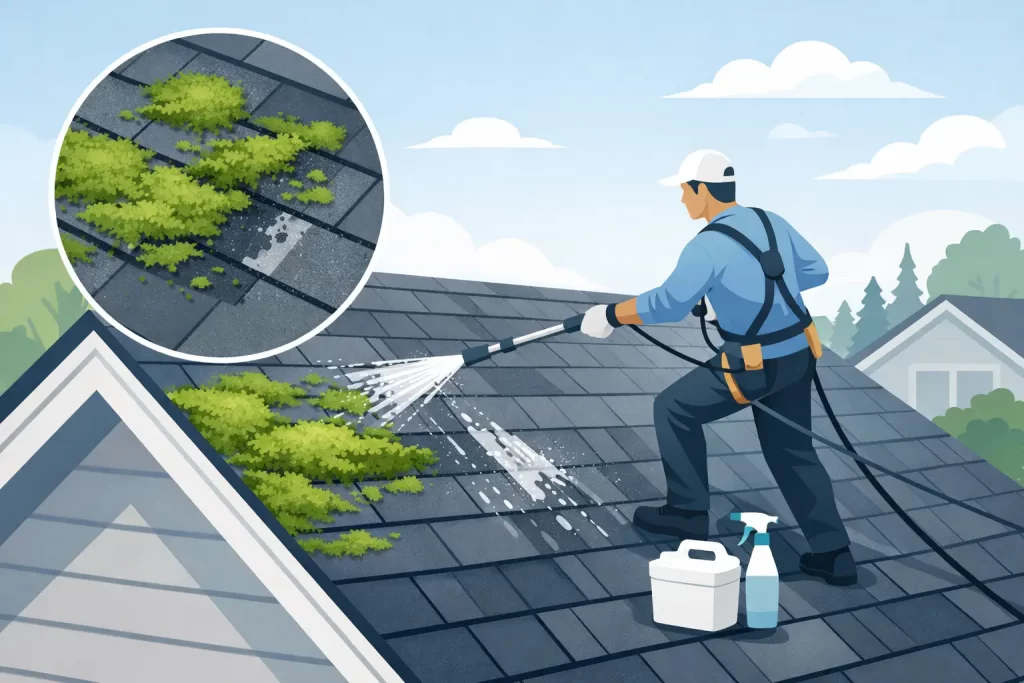
That green patch on the shaded side of your roof is not just a cosmetic issue. If you need to remove moss from shingles, timing matters because moss holds moisture against the roof, lifts shingle edges, and creates the kind of slow damage that turns into expensive repairs. On Long Island, where damp conditions and tree cover can keep a roof wet longer than it should be, moss can spread faster than many property owners expect.
The biggest mistake people make is treating moss like dirt. It is not. Moss is a living growth with root-like structures that cling to the surface and trap water. If you attack it the wrong way with a pressure washer or aggressive scraping, you can strip granules, loosen shingles, and shorten the life of the roof you are trying to protect.
Why moss on shingles is a real roof problem
Moss thrives where moisture lingers. North-facing slopes, roofs under heavy tree cover, and older shingles are common trouble spots. Once moss takes hold, it acts like a sponge. That constant moisture can wear down asphalt shingles, encourage further biological growth, and make the roof more vulnerable during freeze-thaw cycles.
It also causes a mechanical problem. As moss thickens, it can grow under the edges of shingles and slightly lift them. That creates openings where wind-driven rain can work its way in. You may not notice a leak right away, but the roof system is under stress long before water shows up inside.
For commercial properties and homeowners focused on curb appeal, moss is also a bad look. A roof covered in green buildup can make the whole property seem neglected, even when everything else is well maintained.
The safest way to remove moss from shingles
If your goal is to remove moss from shingles without causing damage, low-pressure cleaning is the safest method in most cases. That means using a roof-safe treatment that kills the moss at the source and allowing it to release from the shingle surface without blasting the roof apart.
This is where method matters more than effort. High pressure may seem faster, but it is one of the easiest ways to ruin asphalt shingles. Those protective granules on the surface are there for a reason. Once they are stripped away, the shingles age faster and lose their ability to protect the roof deck below.
A proper soft wash approach uses specialized cleaning solutions and very low pressure to treat moss, algae, mildew, and similar growth safely. Instead of forcing the roof clean with water pressure, it breaks down the infestation and lets the roof be cleaned with far less risk.
Can you remove moss from shingles yourself?
Sometimes, but it depends on the roof, the severity of the moss, and how comfortable you are working at height. A small patch on a lower, easily accessible section of roof is very different from thick moss growth on a steep second-story roof.
If you are considering a DIY approach, the first priority is safety. Roof work is dangerous, especially when moss is already making the surface slick. The second priority is avoiding damage. Even well-meaning homeowners can do more harm than good if they scrub too hard, walk on brittle shingles, or use the wrong cleaner.
For light moss buildup, a roof-safe moss treatment may be enough. You apply the product according to label directions, let it work, and allow weather to help loosen and wash away the dead growth over time. This is slower than aggressive cleaning, but slower is often better when the alternative is damaging the roof.
What you should not do is take a pressure washer to the shingles. This is one of the most common and most costly mistakes. It may remove visible moss quickly, but it can also remove years of roof life just as fast.
What not to do when moss is growing on your roof
A lot of roof damage happens during attempted cleaning, not from the moss itself. Scraping with stiff tools can gouge shingles and dislodge granules. Household bleach mixtures can be too harsh if they are not used correctly. Walking heavily across mossy areas can crack or loosen shingles, especially on older roofs.
There is also a difference between getting rid of the green surface and solving the underlying issue. If the moss comes off but the roof remains shaded, damp, and untreated, it will likely return. The best results come from removing the growth and reducing the conditions that let it thrive.
How professionals handle moss without damaging shingles
Professional roof cleaning is not just stronger DIY. Done correctly, it is a different process. A trained exterior cleaning company will assess the roof type, age, pitch, and extent of growth before choosing the right treatment. That matters because not every roof can be handled the same way.
For asphalt shingles, soft washing is usually the preferred method because it cleans effectively without relying on damaging pressure. The treatment reaches into the moss and related organic growth, killing it more completely than surface rinsing alone. That improves the appearance of the roof and helps extend the time before regrowth appears.
A professional also knows how to protect surrounding landscaping, manage runoff responsibly, and clean the roof evenly without leaving patchy areas behind. For property owners who want results without the risk, this is usually the smarter path.
When moss removal becomes urgent
Not every roof stain is an emergency, but thick moss should not be ignored. If you see clumps forming along shingle edges, areas where shingles appear lifted, or patches spreading season to season, it is time to act. The longer moss sits, the more moisture it holds and the harder it becomes to remove cleanly.
Urgency also goes up if the roof is older. Aging shingles are less forgiving. They can lose granules more easily and may already have weakened adhesion. In that case, a careful low-pressure approach is even more important.
If you are managing a commercial building, urgency is also about appearance and liability. A neglected roof can affect tenant perception, property image, and maintenance planning. Dealing with moss early is simpler than explaining why roof repairs showed up sooner than expected.
How to help keep moss from coming back
Once you remove moss from shingles, the next step is reducing the chance of regrowth. This is where maintenance pays off. Trimming back overhanging branches can increase sunlight and airflow. Keeping gutters clear helps the roof shed water properly instead of holding moisture near the edges. Regular inspections can catch early green patches before they become thick mats.
Treatment choice matters too. If the roof was only rinsed and not properly treated, moss can return relatively quickly. A true soft wash process addresses the biological growth, not just the visible layer.
It also helps to be realistic. Some roofs are naturally more prone to moss because of shade, orientation, and local moisture conditions. On parts of Long Island with dense trees and humid coastal air, prevention may mean periodic professional cleaning rather than expecting a one-time fix to last forever.
Is roof moss always a job for a professional?
Not always, but often. If the growth is minor, the roof is easy to access, and you are using a roof-safe product exactly as directed, a homeowner may be able to manage a small area. But once the moss is widespread, thick, or located on a steep or high roof, professional service becomes the safer and more cost-effective choice.
That is especially true if you care about preserving the shingles. Cheap, aggressive cleaning can create expensive roof problems. A professional soft wash service is designed to clean the roof while protecting the material underneath. That balance is the whole point.
Supreme Clean Power Washing handles this the right way for homeowners and property managers who want visible results without the damage risk that comes with high-pressure roof cleaning. For many properties, that means a cleaner roof now and fewer headaches later.
The real goal is not just a cleaner roof
Anyone can knock moss loose. The real job is protecting the roof while getting rid of what should not be there. If you have moss growth on shingles, treat it like a roof care issue, not a quick cosmetic fix. The right cleaning method can restore the look of the property, help prevent moisture-related damage, and keep a good roof performing the way it should.