
Black streaks on a roof do not show up all at once. They build slowly, and by the time most property owners notice them, algae, mold, moss, or lichen has already had time to settle in. If you are asking how often should roofs be cleaned, the short answer is every 1 to 3 years for most homes and commercial properties. The better answer depends on your roof type, tree cover, moisture levels, and how quickly organic growth returns.
For Long Island properties, roof cleaning is not just about appearance. Humidity, shade, salt air, and seasonal debris can create the right conditions for roof staining and biological growth. If that buildup is left alone too long, it can hold moisture, shorten the life of roofing materials, and drag down curb appeal fast.
How Often Should Roofs Be Cleaned for Most Properties?
Most roofs should be professionally cleaned about every 1 to 3 years. That range covers the majority of asphalt shingle roofs, which are especially common on residential properties. If your roof is heavily shaded by trees, stays damp for long periods, or has a history of moss or algae growth, the schedule usually shifts closer to every 1 to 2 years.
On the other hand, a newer roof with strong sun exposure and very little overhanging debris may stay cleaner for longer. That does not mean it should be ignored. It means inspections matter just as much as cleanings. Waiting until stains become severe is not the best strategy, because by then the buildup is usually more established and harder on the roof over time.
Commercial buildings vary more. Flat or low-slope roofing systems can collect debris and moisture differently than pitched residential roofs, so they should be evaluated based on drainage, surrounding trees, and visible growth. A clean-looking roof is not always a healthy roof, but a stained roof is usually telling you something.
What Affects How Often Roofs Need Cleaning?
There is no one schedule that fits every property. A roof in full sun will age and stain differently than one tucked under mature trees. Moisture is the biggest factor. The longer a roof stays damp, the more likely it is to develop algae, moss, mildew, and lichen.
Shade speeds that process up. Branch coverage blocks sunlight, holds leaves and twigs against the roof, and creates the kind of cool, damp conditions that organic growth loves. If your gutters overflow or your roof has areas where water does not drain cleanly, those sections may need attention sooner than the rest.
Roof material matters too. Asphalt shingles are particularly prone to those dark streaks caused by algae. Tile, metal, and other roofing materials can also develop buildup, but they need the right cleaning method to avoid damage. That is why frequency and method should always be considered together. A roof that is cleaned too aggressively can be damaged even if the timing was right.
Signs Your Roof Should Be Cleaned Sooner
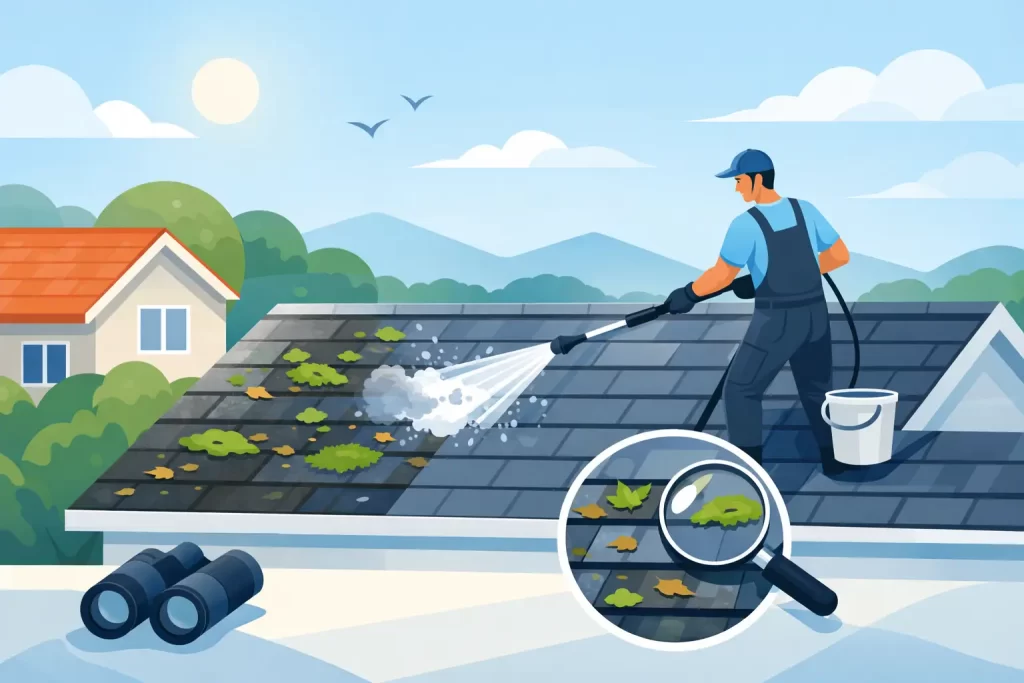
If you see black streaks, green patches, clumps of moss, or blotchy discoloration, your roof is already due for attention. These are not harmless cosmetic marks. Algae feeds on roofing materials and spreads. Moss can lift shingles and trap water. Lichen is even more stubborn because it bonds tightly to the surface.
Another common sign is excess debris sitting in roof valleys or along edges. Leaves, pine needles, and seed pods hold moisture where it should not stay. Even if stains are not obvious from the ground, that debris can create the conditions that lead to staining and growth.
You may also notice your home looks older or less maintained than it really is. Clean siding and a stained roof do not balance each other out. Roof discoloration is one of the first things people see from the street, and it can make the whole property look neglected.
Why Waiting Too Long Costs More
A lot of owners put off roof cleaning because they think it is cosmetic and optional. That usually changes once buildup becomes thick enough to cause damage or once curb appeal becomes a problem before a sale, lease, or appraisal. Cleaning earlier is almost always the smarter move.
Organic growth traps moisture against the roof surface. Over time, that can contribute to shingle deterioration, granule loss, and premature aging. Moss can wedge into gaps and lift edges. Debris can slow drainage and create trouble spots. Even if a roof does not leak today, neglect can shorten its service life.
There is also the issue of cost. A roof with light to moderate staining is generally easier to treat than one with years of buildup. When growth is allowed to spread and harden, cleaning becomes a larger project. Maintenance is usually less expensive than correction.
The Safest Way to Clean a Roof
This is where many property owners make the wrong call. A roof should not be blasted with high pressure. That can strip protective granules from shingles, force water under roofing materials, and do real damage in the name of cleaning.
The safer and more effective approach is soft washing. Soft washing uses low pressure and specialized cleaning solutions to kill algae, mold, mildew, moss, and lichen at the root. Instead of just knocking surface stains around, it treats the source of the problem. That is the difference between a roof that looks better for a few weeks and one that stays cleaner longer.
For homeowners and property managers who are rightly concerned about protecting expensive roofing materials, this matters. A roof cleaning service should improve the surface, not wear it down. That is why professional roof cleaning is not just about equipment. It is about using the correct process for the specific roof.
How Often Should Roofs Be Cleaned in Long Island Conditions?
In Nassau County, Suffolk County, and across Long Island, many roofs need cleaning on the more frequent end of the range because local conditions encourage algae and organic growth. Coastal moisture, humid summers, falling leaves, and shaded suburban lots can all accelerate roof staining.
That does not mean every roof needs annual cleaning. It means annual inspection is smart, and many properties will benefit from service every 1 to 2 years rather than waiting the full 3 years. If your roof has a history of black streaks or moss return, a shorter maintenance cycle is usually the right move.
This is especially true for homes in tree-heavy neighborhoods or commercial properties where appearance plays a role in customer perception. A clean roof supports the overall look of the building and helps show that the property is being cared for properly.
DIY or Professional Roof Cleaning?
Roof cleaning is one of those jobs that looks simple from the driveway and gets risky fast once you are on the ladder. Beyond the fall hazard, there is also the issue of using the wrong chemicals, the wrong pressure, or the wrong technique. That can void warranties, damage shingles, and leave uneven results.
Professional roof cleaning gives you a better chance of getting the roof truly treated instead of just rinsed. A trained team can identify what kind of growth is present, choose the right soft wash process, and clean the roof without the damage associated with high-pressure washing. When that service is backed by a satisfaction guarantee or a limited spot-free warranty, the value is even clearer.
For many owners, the real benefit is peace of mind. You are not guessing. You are protecting one of the most expensive parts of the property with the right method.
A Better Roof Cleaning Schedule Starts With Inspection
If you are still wondering how often should roofs be cleaned, the most practical answer is this: do not clean on a fixed calendar alone, and do not wait until the roof looks bad from the street. Have the roof checked regularly and clean it before buildup becomes severe.
A good rule of thumb is to watch for early staining, inspect after heavy leaf seasons, and plan on professional cleaning every 1 to 3 years depending on exposure and past growth. If your roof sits in shade, stays damp, or has already shown signs of algae or moss, lean toward the shorter end of that range.
At Supreme Clean Power Washing, we see the difference proper soft washing makes for roofs across Long Island. The goal is simple: protect the roof, restore the look of the property, and stop stains at the source instead of just chasing them after they spread.
A clean roof should not be a last-minute fix. It should be part of how you protect your property before small issues turn into expensive ones.

