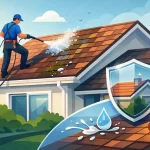


Black streaks on a roof are not just an eyesore. They usually mean algae is feeding on the surface, holding moisture, and slowly shortening the life of the roof. That is exactly why the soft wash roof cleaning process matters. Done correctly, it removes the real source of staining without the damage risk that comes with blasting shingles with high pressure.
For homeowners and property managers, this is where a lot of confusion starts. Many people assume roof cleaning means pressure washing. It does not. In fact, high pressure is one of the fastest ways to loosen granules, disturb shingles, and create avoidable wear. Soft washing takes a different approach. It uses low pressure and professional cleaning solutions to kill algae, mold, mildew, moss, and lichen at the root, then gently rinse the roof clean.
What the soft wash roof cleaning process actually does
A proper roof cleaning is not about forcing stains off the surface. It is about treating the biological growth that caused them in the first place. Those dark roof streaks are often caused by Gloeocapsa magma, a type of algae that spreads easily and thrives in humid conditions. On Long Island, where roofs deal with moisture, shade, salt air, and seasonal weather swings, that buildup is common.
The soft wash roof cleaning process is designed to stop that growth instead of simply making the roof look better for a week or two. The cleaning solution breaks down organic buildup and kills spores that continue spreading if they are left behind. That leads to a cleaner roof, but it also helps prevent fast regrowth.
This is the real difference between a cosmetic rinse and a professional treatment. If the root cause stays alive, the stains come back quickly. If the growth is properly treated, the results last longer and the roof stays healthier.
Step by step: how a professional roof soft wash works
Every roof is different, but the general process follows a clear sequence. The first step is inspection. A trained technician looks at the roofing material, the age of the roof, the level of staining, and the presence of moss or lichen. They also check surrounding landscaping, gutters, downspouts, and any areas that need extra protection during the cleaning.
Next comes site prep. This part matters more than most property owners realize. Plants and grass near the home are pre-watered, sensitive areas are identified, and runoff is managed carefully. Downspouts may be handled in a way that controls where the solution travels. A professional company does not just think about the roof. It thinks about the whole property.
After prep, the cleaning solution is applied with specialized low-pressure equipment. This is where the process separates itself from pressure washing. The solution is delivered gently, with enough coverage to treat the affected areas without using force that could damage shingles or roofing components. The goal is saturation and treatment, not impact.
Once applied, the solution needs time to work. It breaks down algae staining and starts killing moss, mildew, mold, and lichen. On some roofs, especially those with heavy growth, this stage may require careful reapplication in problem areas. Not every roof responds the same way, and a good contractor adjusts based on what the surface needs.
Then comes the rinse, if the roof type and condition call for it. In some cases, the cleaning action continues after the application, and the weather helps complete the visual improvement over time. In other cases, a low-pressure rinse helps remove loosened debris and residue. The right approach depends on the roof material, the degree of buildup, and the treatment plan.
Finally, the technician checks the work, clears the surrounding area, and makes sure the property is left in good shape. A professional job should leave the roof visibly cleaner without leaving behind damage, stripped granules, or the kind of mess that makes you regret having the service done.
Why low pressure matters on asphalt shingles
Most residential roofs in Nassau County and Suffolk County are not built to handle aggressive cleaning. Asphalt shingles have a protective granule layer that helps shield the roof from sun exposure and weather. When someone uses high pressure on that surface, those granules can be dislodged. Once that happens, the roof is more vulnerable to wear.
That is why soft washing is considered the safer method for roof cleaning. It relies on chemistry and technique instead of brute force. The contaminants are treated and removed without hammering the roofing material. For property owners, that means less risk and a better long-term outcome.
It also makes sense from a maintenance standpoint. A roof is one of the most expensive parts of any building. Cleaning it should extend its useful life, not shorten it. The right method protects that investment while improving curb appeal at the same time.
What gets removed during the soft wash roof cleaning process
Roof staining is rarely just dirt. Most of the time, there is active biological growth involved. A proper soft wash can address algae, mold, mildew, moss, lichen, and the grime that collects around them.
Algae creates the familiar black streaking that makes a roof look aged and neglected. Moss tends to trap moisture and can lift edges over time if ignored. Lichen is especially stubborn because it bonds tightly to the surface. Each one behaves differently, which is another reason roof cleaning should not be treated like a one-size-fits-all spray job.
The soft wash roof cleaning process handles these issues by attacking growth at the source. That gives you more than a cleaner appearance. It helps reduce moisture retention and lowers the chance that the same problem will return right away.
How long results last and what affects them
This is one of the most common questions, and the honest answer is that it depends. Results can last a long time, but not every property will stay clean for the same period. Shade, tree coverage, roof pitch, drainage patterns, nearby moisture, and local climate all play a role.
On Long Island, properties near heavy tree cover or coastal moisture often see faster organic regrowth than homes with better sun exposure and airflow. That does not mean the process failed. It means the environment around the roof is working against it.
What matters is that the roof was treated properly in the first place. A professional soft wash gives the roof a strong reset by removing active growth, not just rinsing off visible stains. That is also why warranty-backed service gives many property owners extra confidence. When a company stands behind the result, it tells you they trust the method.
When roof cleaning should be done
If your roof has black streaks, green patches, visible moss, or sections that always look damp and discolored, it is time to look into cleaning. Waiting usually does not improve the problem. Organic growth spreads. It holds moisture. It makes the roof look older than it is and can create more difficult conditions later.
Season matters, but there is no single perfect month for every property. Weather, roof condition, and current buildup all affect scheduling. The better approach is to have the roof evaluated when signs of staining appear instead of putting it off until the growth is heavy.
For commercial properties, timing often comes down to appearance and liability as well as maintenance. A stained roof can reflect poorly on the building, especially if the rest of the exterior is maintained well. Clean surfaces send a better message.
Choosing the right company for roof soft washing
Not every exterior cleaning company specializes in roofs. That distinction matters. Roof cleaning requires the right equipment, the right solution mix, and the right judgment. Too much pressure is a problem, but so is weak treatment that leaves living growth behind.
A dependable contractor should be able to explain their process clearly, protect surrounding landscaping, and tell you what kind of result to expect based on your roof’s condition. Guarantees help too, especially when they are tied to actual roof cleaning experience rather than generic service promises.
For homeowners who want safer, longer-lasting results, this is not the place to gamble on the cheapest option. A rushed job can cost more later if the roof is damaged or the staining returns almost immediately. Companies like Supreme Clean Power Washing have built their reputation around low-pressure exterior cleaning because the method works and it protects the surfaces that matter most.
A clean roof changes the look of the entire property, but the bigger win is knowing it was cleaned the right way. When the process focuses on killing the growth instead of blasting the surface, you get results that look better and make more sense for the life of your roof.